
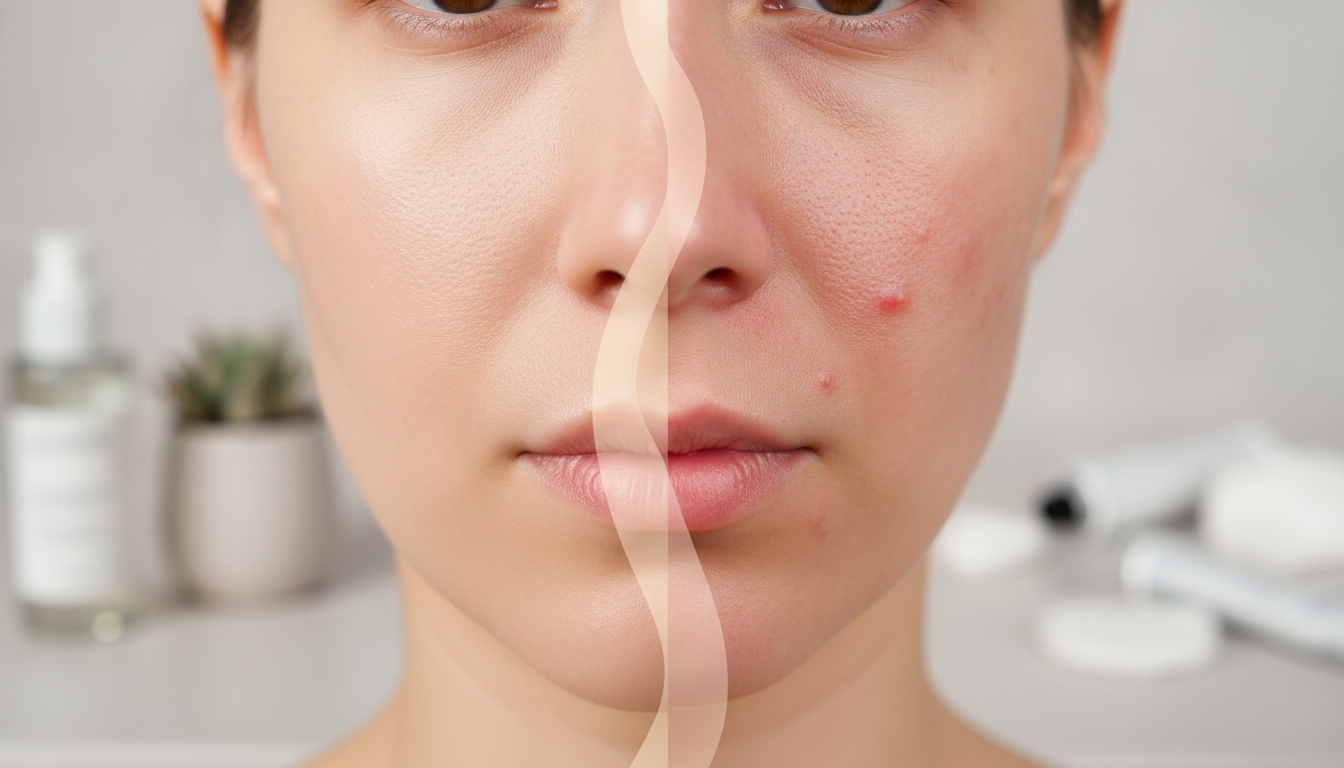
Ever start a new beauty routine and wake up with spots? It’s a common problem that makes people question their products. Knowing Skin Purging vs Breakout: How to Tell the Difference is key to your skin’s health.
When you use products with active ingredients, your skin might go through a change. This change can look like a bad reaction, making it hard to know what to do. Spotting these signs early helps you manage your skincare with confidence.
This guide will help you understand the science behind these reactions. We’ll give you steps to follow for your daily skincare. By knowing the difference, you can keep your skincare journey safe and effective.
Skin Purging vs Breakout: How to Tell the Difference
To tell the difference between a purge and a breakout, you need to understand what’s happening under your skin. When you start using new products, your skin might react in confusing ways. Knowing about skin reaction types is key to figuring out what to do next.
Learning about Skin Purging vs Breakout: How to Tell the Difference helps you not give up on good treatments too soon. Knowing the skin reaction causes lets you keep a routine that’s good for your skin in the long run.
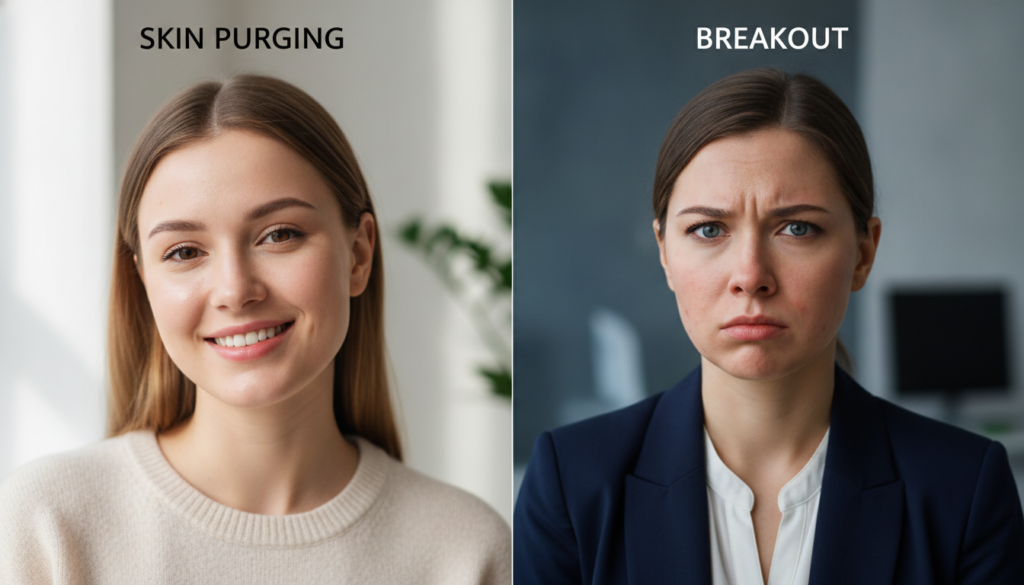
What is Skin Purging?
Skin purging is when your skin gets rid of old cells faster. Using products like retinoids or chemical exfoliants speeds up this process. They help clear out deep-seated dirt and oils.
This quick process can make it seem like you’re getting more blemishes all at once. But remember, these spots were already forming under your skin. The product just brings them to the surface faster.
What Causes a Typical Breakout?
A breakout, on the other hand, is usually caused by things outside your skin. Knowing the difference between Skin Purge vs Acne is important for your skincare routine. Common causes of breakouts include:
- Clogged pores from too much oil or heavy products.
- Hormonal shifts that make your skin produce more oil.
- Environmental stress or bacteria that cause inflammation.
- Poor cleansing habits that let dirt and pollutants get trapped in your skin.
Unlike a purge, breakouts often show up in places you don’t usually get blemishes. If your skin gets irritated or inflamed without new products, it’s likely reacting to something outside.
Key Indicators of Skin Purging
Understanding the difference between a skin purge and acne is crucial. When you start using strong products, your skin may react. Spotting these signs early helps you stick to your skincare routine.
The Role of Active Ingredients
Active ingredients speed up your skin’s cell turnover. They help get rid of dead skin cells quickly. This brings hidden dirt to the surface, making your skin renew faster.
You might see more blemishes at first. But this is a good sign that the product is working. Sticking to your routine is key during this time to help your skin heal.
Common Ingredients That Trigger Purging
Knowing which ingredients cause purging is important. Some chemicals can make your skin react. Watch out for these common ones:
- Retinoids and Retinol
- Alpha Hydroxy Acids (AHAs) like Glycolic or Lactic Acid
- Beta Hydroxy Acids (BHAs) such as Salicylic Acid
- Vitamin C serums
- Professional chemical peels
Timeline and Duration of a Purge
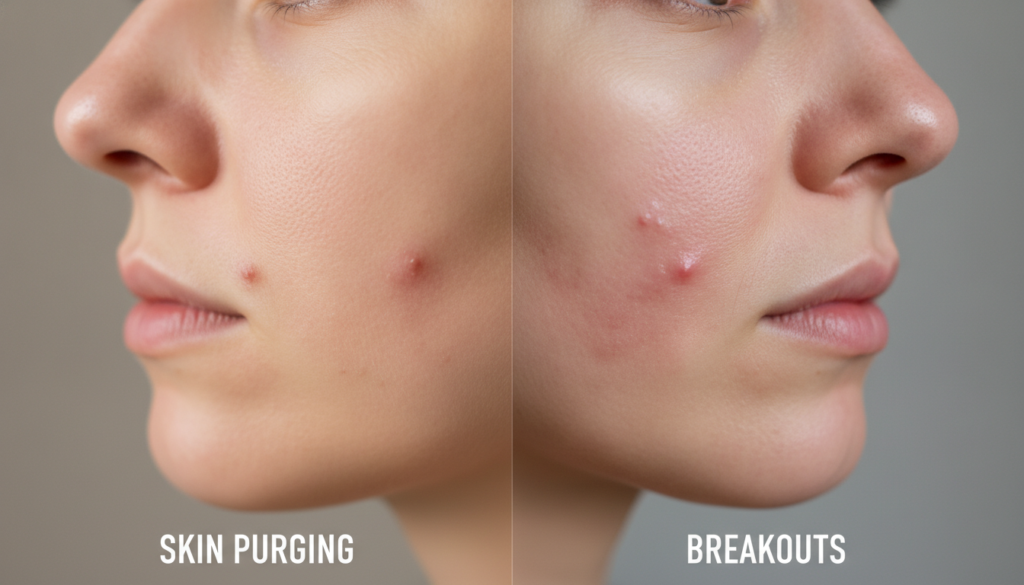
A purge usually starts right after you start a new product. It lasts about four to six weeks. This is one full skin cycle.
If your skin problems don’t go away after six weeks, it might not be a purge. Watch your skin closely in the first month. If you don’t see improvement, it’s time to think about changing products.
Location of Symptoms
Where the blemishes show up can tell you if it’s a purge or a breakout. Purging happens in areas where you usually get acne. If you get breakouts on your chin, a purge will likely show up there too.
A breakout, on the other hand, can pop up in new places. Keep an eye on these signs to understand your skin better:
- See if the blemishes are in your usual problem zones.
- Check if the spots heal faster than your usual acne.
- Notice if the intensity of the purge goes down over time.
Identifying Signs of a True Breakout
Knowing the difference between a healthy adjustment and a negative reaction is key for your skin. Spotting the difference between skin purging and breakouts needs a careful eye. Normal initial activity is okay, but persistent issues often mean a deeper problem.
Why Your Skin Reacts Negatively
Your skin might react badly if a product messes with your natural moisture barrier. Signs like persistent redness, burning, or intense itching usually mean irritation, not purging. These issues often come from harsh chemicals or fragrances your skin can’t handle.
Identifying Irritants and Comedogenic Ingredients
Many products have ingredients that clog pores and cause inflammation. Look out for isopropyl myristate, coconut oil, or heavy silicones on labels. These are comedogenic, trapping debris and oil under the skin.
New blemishes in areas you rarely get them mean the product is likely to blame. Switch to non-comedogenic products to avoid these issues. Always check labels to avoid introducing pore-clogging agents.
Differences in Texture and Appearance
Understanding the difference between skin purging and breakouts helps you choose better products. A purge has small, white bumps that clear up quickly as your skin regenerates. Breakouts, on the other hand, are deep, painful cysts or inflamed red papules that last for weeks.
Check where the spots are to tell if it’s purging or a breakout. Purging happens in areas prone to congestion. Breakouts in new areas mean your skin is reacting to something.
When a Breakout Persists Beyond the Adjustment Period
Most purging symptoms should fade in four to six weeks with regular use. If your skin doesn’t get better or gets worse, stop using the product. Persistent inflammation means your skin is reacting negatively, not adjusting.
Don’t force your skin to “push through” discomfort or damage. Stopping the product lets your barrier heal. If irritation persists after stopping, see a dermatologist to find the cause.
How to Distinguish Skin Purging from a Breakout in Your Routine
It’s important to know the difference between skin purging and a breakout. When you start using new skincare products, your skin might go through a change. Understanding Skin Purging vs Breakout: How to Tell the Difference helps you avoid worrying and keeps your skin healthy.
Evaluating Your Current Skincare Products
Look at the ingredients in your new products. If you’ve added retinoids, AHAs, or BHAs, your skin might be getting rid of dead cells faster. This can cause purging, which often happens in areas prone to clogs.
Make sure your other products are labeled as non-comedogenic to avoid clogged pores. A heavy moisturizer or sunscreen might cause a reaction instead of purging. The key is knowing if the product is meant to exfoliate or block pores.
Monitoring Your Skin Reaction Types
Watch how your skin reacts. Purging shows up as small, uniform bumps that go away fast. Breakouts, on the other hand, are deep, painful, and last longer.
Keep a daily log to track changes. If irritation shows up in new places, it’s likely a product reaction. Consistency is key to spot patterns.
Steps to Take When You Are Unsure
If you’re not sure what’s happening, simplify your routine. Stop using the new product to see if your skin calms down. Here are some steps to help you regain control:
- Use active treatments less often, like once or twice a week.
- Use gentle, hydrating cleansers to help your skin.
- Do a patch test on your neck or jawline.
- Don’t introduce too many new products at once.
When to Consult a Dermatologist
At times, you might need a dermatologist’s help to keep your skin healthy. See a dermatologist if your skin gets very red, itchy, or painful. They can tell if it’s an allergic reaction or a severe breakout.
If you see signs of infection or your skin doesn’t get better after a few weeks, don’t wait. Getting expert advice early can prevent damage and help you find the right skincare for you.
Conclusion
Reaching your long-term skin goals takes time and understanding your skin. Knowing the difference between Skin Purging and Breakouts helps you make better choices for your skin care.
Think of your skin as a living organ that responds to changes. The confusion between Skin Purging and Breakouts can be frustrating. But, tracking your skin’s progress for four to six weeks can clear things up. This time lets active ingredients like retinol or salicylic acid do their job.
If irritation doesn’t go away, see a dermatologist for help. Look into gentle products from CeraVe or La Roche-Posay to support your skin. Being consistent is key to keeping your skin healthy and glowing.
Review your current products and talk to your skincare provider about them. This way, you can make sure your routine meets your specific needs. Taking these steps is the first step towards clear, healthy skin.
FAQ
How can I tell the difference between Skin Purging vs Breakout?
To tell Skin Purging vs Breakout, look at where and how long the blemishes last. Purging happens in congested areas and clears up fast. Breakouts, on the other hand, pop up in new places, lasting longer and causing redness or itching.
What are the most common Skin Purging symptoms to watch for?
When Differentiating Skin Purging and Breakouts, watch for small, temporary bumps or whiteheads soon after using a high-turnover active. This means your skin is getting rid of dead cells and pushing out deep-seated debris faster.
Which Skin reaction causes lead to a purge rather than a standard breakout?
A purge is caused by ingredients that speed up cell turnover. This includes retinoids, AHAs, BHAs, and Vitamin C. Breakouts, though, are often caused by clogged pores, hormones, or stress.
How long does it take to distinguish if it is a Purging or breakout?
It usually takes 4 to 6 weeks to tell if it’s a Purging or breakout. A purge should clear up in this time. If your skin keeps getting worse after six to eight weeks, it’s likely a breakout or an adverse reaction.
What are the best methods for How to distinguish Skin Purging from a Breakout?
For How to distinguish Skin Purging from a Breakout, check your products. Make sure they are non-comedogenic and right for your Skin reaction types. If you get deep, painful cystic acne in clear spots, it’s a bad reaction, not a purge.
Should I stop using a product if I am unsure about my Skin Purge vs Acne reaction?
If you’re unsure between Skin Purge vs Acne and your skin is dry, stinging, or irritated, slow down. You should keep using actives during a purge but stop if it’s a breakout or allergic reaction. If unsure, use a gentle moisturizer and see a dermatologist for advice.