
Ever wondered how to keep your skin clear? Learning about What Is Non-Comedogenic Skincare helps you pick products that stop pores from clogging. These products avoid ingredients that cause breakouts, keeping your face healthy.
Many face acne-prone skin issues. Using Non-Comedogenic Skincare is a smart move for a balanced glow. These gentle products lower the chance of irritation from heavy oils or waxes.
Knowing the Importance of Non-Comedogenic Skincare makes shopping for beauty products easier. You can find products that help you achieve a smooth, radiant look. Making smart choices is key to keeping your skin healthy for the long term.
What Is Non-Comedogenic Skincare and Why Does It Matter?
Ever wondered why some lotions cause breakouts and others don’t? You’re likely searching for Non-Comedogenic Skincare solutions. This term is common on many products, but it often confuses people about what they’re buying.
Knowing the difference between these products is key to clear skin. By understanding these formulas, you can improve your daily beauty routine.
Defining the term in modern dermatology
In dermatology, it means products that don’t block your pores. It’s important to know that there’s no federal rule or FDA check for this label. This means brands can call their products non-comedogenic without strict testing.
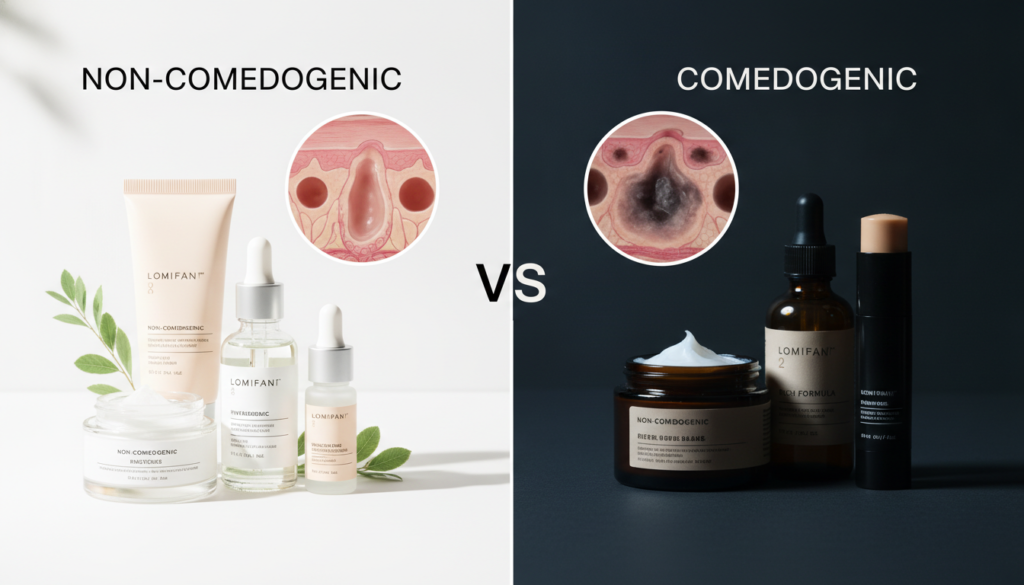
So, don’t just trust the label. Always check the ingredients list to make sure it won’t clog your pores. Knowing the difference between Non-Comedogenic vs Comedogenic helps you pick safe products for your skin.
The core philosophy behind non-comedogenic formulations
The main aim of these products is to let your skin breathe. They use ingredients that don’t cause clogged pores. By avoiding heavy oils and waxes, they prevent acne-causing buildup.
When you look at Non-Comedogenic vs Comedogenic products, non-comedogenic ones are lighter and don’t block pores. Choosing Non-Comedogenic Skincare helps keep your pores open and your skin balanced. This way, your moisturizer or sunscreen helps your skin, not harms it.
The Science of Comedogenicity and Pore Health
Breakouts start deep in your hair follicles. Knowing the difference between Non-Comedogenic vs Comedogenic ingredients is key to clear skin. By understanding how your skin reacts to different substances, you can choose better products.
Understanding the comedogenic scale
Scientists use a scale to rate ingredients for pore clogging. They used to test on rabbit ears, but now they use computer-based QSAR modeling. This method predicts how molecules affect your skin barrier.
The scale goes from zero to five. Zero means no problem, and five means big trouble. Knowing this helps you pick the right products.
How sebum and dead skin cells create blockages
Your pores are small openings for hair and oil glands. Sebum keeps your skin moist. But, problems start when oil and debris mix.
- Excess sebum production
- Accumulation of dead skin cells
- Trapped environmental pollutants
The role of follicular hyperkeratosis
Follicular hyperkeratosis happens when skin cells don’t shed right. They stick together inside the pore. This blocks oil from getting out, causing comedones.
External factors that trigger pore congestion
Your environment affects your pores. Makeup, thick creams, and humidity trap oil and bacteria. Choosing the right products can prevent breakouts.
Key Benefits of Non-Comedogenic Skincare for Your Routine
Your skin needs a routine that helps it function well without clogging pores. Learning about non-comedogenic skincare helps you choose products that keep your skin clear and bright. It’s key to understanding why non-comedogenic skincare is important for your skin’s health and strength.
Managing acne-prone skin effectively
For those with acne, finding the right skincare for acne-prone skin is crucial. These products are made to keep pores open and not dry out your skin. They avoid ingredients that can clog pores and cause more breakouts.
- Prevents the formation of new comedones or blackheads.
- Maintains a lightweight feel that does not weigh down your skin.
- Allows your pores to breathe throughout the day.
- Reduces the risk of inflammation caused by trapped debris.
Why sensitive skin types require non-clogging formulas
If your skin gets red or irritated easily, non-comedogenic for sensitive skin is a big help. These products have fewer harsh ingredients that can upset sensitive skin. They create a calm environment for your skin.
Many moisturizers have heavy ingredients that can irritate sensitive skin. Choosing lighter, tested products can prevent more irritation. Your skin will feel better and react less to new things.
Maintaining a balanced skin barrier
A healthy skin barrier protects your skin from harm and keeps it moist. Using non-clogging products helps keep this balance, keeping your skin hydrated and soft. When your barrier is strong, your skin can fight off daily pollutants better.
Using these products regularly helps your skin cells renew themselves. This prevents dead skin from building up, which can make your skin look dull or feel rough. By focusing on balance in your skincare routine, you’re investing in your skin’s long-term health and beauty.
How to Identify Non-Comedogenic Products
Choosing the right non-comedogenic skincare means looking at what’s inside. Many brands use catchy labels, but your skin’s health depends on the formula’s chemicals. Learning to read these lists helps you make better choices for your skin.
Decoding ingredient labels
Ingredient lists show what’s in the product, with the first items making up most of it. When you look at these lists, watch out for things that can block pores. Knowing this helps you avoid irritation before it happens.
Common ingredients to avoid
Some heavy oils and waxes can trap dirt in your pores. If you have oily or acne-prone skin, be careful of these:
- Isopropyl Myristate: Used for texture, but can clog pores.
- Coconut Oil: Natural, but comedogenic for many.
- Cocoa Butter: A heavy emollient that can cause congestion.
- Lanolin: A wax that may irritate sensitive skin.
Ingredients that are generally safe
There are many safe alternatives for hydration without clogging pores. These are known as good options for non-comedogenic skincare:
- Squalane: A lightweight oil that mimics your skin’s natural sebum.
- Glycerin: Draws moisture into the skin without a heavy residue.
- Hyaluronic Acid: Provides deep hydration that’s breathable.
- Dimethicone: Creates a protective barrier while allowing skin to breathe.
Navigating marketing claims versus clinical reality
Labels often say “dermatologist-tested” or “won’t clog pores.” But these claims aren’t always tested rigorously. Remember, “non-comedogenic” isn’t strictly regulated by the FDA.
To find reliable Non-Comedogenic products, look for brands that are open about their testing. Trusting your knowledge of ingredients is better than just the label. Choosing products with clean, non-clogging ingredients helps keep your skin clear and balanced.
Common Myths and Misconceptions
Skincare can be confusing with all the labels and buzzwords. Many think certain terms mean their skin is safe. But, the truth is often more complicated. It’s important to understand these myths to find the right skincare for acne-prone skin.
Does non-comedogenic mean oil-free?
Many think “oil-free” means “non-comedogenic.” But, oil-free products can still cause breakouts. Ingredients like isopropyl myristate can clog pores, even if they’re oil-free.
Why natural oils are not always the best choice
Natural oils are popular for their purity and soothing effects. But, many are comedogenic, meaning they can block pores. Even the best Non-Comedogenic skincare should avoid heavy oils like coconut or wheat germ oil.
These oils can trap dirt and bacteria in pores. If you have acne, choose lighter, synthetic options. Always check the comedogenic rating of an oil before using it on your face.
The impact of individual skin chemistry
Your skin is unique, and what works for one might not work for another. Your environment, diet, and hormones affect how your skin reacts to products. This is crucial when looking for Non-Comedogenic for sensitive skin.
Because of these differences, a personal patch test is key. Apply a small amount to your jaw or behind your ear for a few days. If no irritation or congestion happens, it’s safe to use it daily.
Conclusion
Your journey to healthier skin starts with daily choices. Using Non-Comedogenic Skincare is a key step. It helps you maintain a clear complexion over time.
Choosing the right Non-Comedogenic products is crucial. Look for brands like CeraVe and La Roche-Posay. They focus on keeping pores clear while keeping your skin hydrated. Sticking to a simple routine is essential for better skin.
Changing your skincare shopping habits can make a big difference. Watch how your skin reacts to new products. If you still have breakouts or irritation, see a dermatologist. They can help make sure your skincare is right for you.
FAQ
How sebum and dead skin cells create blockages
Dead skin cells and sebum can clog pores. Adding heavy products makes it worse. Non-comedogenic products help avoid this by not clogging pores.
Why sensitive skin types require non-clogging formulas
People with sensitive skin do better with non-comedogenic products. These products avoid heavy ingredients that can irritate. Brands like CeraVe and La Roche-Posay focus on gentle, effective formulas.
Why natural oils are not always the best choice?
Some natural oils can clog pores. Coconut Oil is good for hair but not for acne-prone skin. Know that natural doesn’t always mean safe for your skin.
What Is Non-Comedogenic Skincare and why is it important?
Non-comedogenic skincare helps prevent breakouts. It’s made without ingredients that clog pores. It keeps your skin hydrated and protected without causing acne.
What is the difference between non-comedogenic vs comedogenic products?
Non-comedogenic products are safe for your face. They have ingredients ranked 0 to 2. Comedogenic products, ranked 4 or 5, can clog pores.
Who should prioritize skincare for acne-prone skin labels?
If you have oily or breakout-prone skin, choose non-comedogenic products. They help keep your pores clear and prevent inflammation.
What are the primary benefits of non-comedogenic skincare?
Non-comedogenic skincare makes your skin clearer and reduces acne. It keeps pores open, allowing your skin to stay healthy and glow.
Is it beneficial to use non-comedogenic for sensitive skin?
Yes, it’s a good choice for sensitive skin. These products are gentle and avoid heavy ingredients that can irritate.
How can I find the best non-comedogenic skincare for my routine?
Look for products labeled “non-comedogenic” and check for safe ingredients. Choose trusted brands like EltaMD or La Roche-Posay for the best results.
Can “natural” or “organic” products still be comedogenic?
Yes, some natural ingredients can clog pores. Always check the ingredients list, even if a product is labeled “natural” or “organic.”