

Modern skincare can feel like a science experiment. Many people wonder, Can You Use Niacinamide and Retinol Together? This mix is known for fighting fine lines, acne, and uneven skin tone.
This duo is seen as a powerhouse pairing for many skin types. It combines to enhance your skin while easing irritation from stronger treatments.
Knowing how these ingredients work is crucial for a glowing complexion. We’ll show you how to use them in your daily routine. By following the right steps, you can get the most out of them without harming your skin. Can You Use Niacinamide and Retinol Together safely? Yes, if you do it the right way.
How Niacinamide and Retinol Work Together
To master your skincare, you need to know how your products work. Learning about Niacinamide and Retinol Compatibility helps you choose better for your skin. This knowledge leads to healthier, more resilient skin.
How Retinol Functions in Skin Renewal
Retinol is a vitamin A derivative that boosts cell communication. It tells your cells to renew faster. This process reveals smoother skin by removing dead cells.
Retinol also boosts collagen production. It works deep in the skin to improve elasticity and reduce fine lines. This makes it key for anti-aging.
The Role of Niacinamide as a Skin Barrier Protector
Niacinamide, a water-soluble vitamin B3, is versatile. It repairs DNA and controls inflammation. This keeps your skin calm and balanced.
It also helps maintain moisture by increasing ceramide production. A strong barrier locks in hydration and protects against stressors. It’s crucial for Niacinamide and Retinol Compatibility in your routine.
Can You Use Niacinamide and Retinol Together?
Many people worry about mixing strong skincare ingredients. But, combining niacinamide and retinol is safe. Knowing how these products work can make your skincare routine better.
Debunking Common Skincare Myths
Some think mixing skincare ingredients will harm your skin. They believe niacinamide and retinol cancel each other out. But, this is not true. You can use them together for better skin.
- Myth: Mixing actives always causes chemical burns.
- Myth: Niacinamide deactivates the potency of retinol.
- Myth: You must wait hours between applying different serums.
- Myth: Using both will lead to excessive skin peeling.
Why These Ingredients Are Chemically Compatible
A 2008 study showed niacinamide reduces irritation from retinoic acid. It makes your skin more tolerant of retinol’s effects.
Niacinamide strengthens your skin, making it less sensitive to harsh ingredients. So, yes, you can use niacinamide and retinol together. This combo is great for improving skin texture and keeping it healthy.
By choosing to use niacinamide and retinol together, you get the best of both worlds. You’ll enjoy anti-aging benefits and protection from inflammation. Layering these products safely gives you a glowing, balanced complexion.
The Synergistic Benefits of Combining These Ingredients
These two ingredients work together to improve your skincare. They tackle common skin issues and reduce the harsh effects of strong products. This Niacinamide and Retinol Combination helps you get a healthy, glowing skin.
Reducing Retinol-Induced Irritation
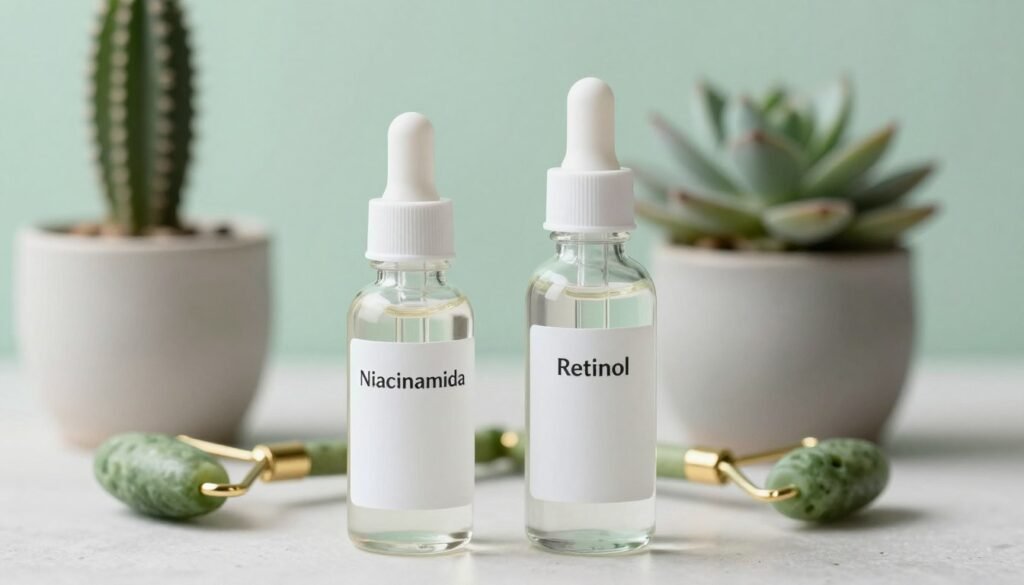
Starting a new treatment can cause redness and flaking. A 2017 study showed that a cream with both ingredients caused less irritation than retinol alone. Niacinamide acts as a soothing agent to ease your skin during the adjustment phase.
Enhancing Overall Skin Texture and Tone
The Benefits of Niacinamide and Retinol Combination include better skin texture and tone. Retinol speeds up cell turnover, while niacinamide refines pores. Together, they make your skin smoother and more even, looking refreshed and vibrant.
Boosting Collagen Production and Barrier Function
This duo also supports your skin’s long-term health. Retinol boosts collagen production for firmer skin. Niacinamide strengthens your moisture barrier, keeping your skin resilient and hydrated.
Adding these ingredients to your routine is a smart choice for lasting results. The Benefits of Niacinamide and Retinol Combination go beyond surface-level changes. This powerful combination lets you enjoy professional-grade skincare at home.
Potential Side Effects and How to Mitigate Them
Combining actives can be great, but watch out for irritation signs. Even with a safe Niacinamide and Retinol Combination, your skin might need time. Knowing how your skin reacts is key to a healthy glow.
Identifying Signs of Over-Exfoliation
Over-exfoliation happens when your skin barrier gets too weak. You might feel tightness or see a shiny face after cleansing. If this happens, it’s time to give your skin a break.
Look out for these signs that your skin needs a rest:
- Persistent redness or flushing that doesn’t fade fast.
- A stinging or burning feeling when using moisturizers.
- Excessive dryness, flaking, or peeling around the mouth and nose.
- Being too sensitive to other products in your routine.
Managing Skin Sensitivity During the Adjustment Period
Adjusting to a Niacinamide and Retinol Combination is normal. Start with lower retinol concentrations to build tolerance slowly. This helps your skin without drying out.
Try the “sandwich method” for extra protection. Apply a thin moisturizer layer before and after your treatment. This method reduces irritation while keeping your skin hydrated. Always adjust your routine if you feel any discomfort.
The Importance of Patch Testing New Combinations
Always do a patch test before using a new product on your face. It’s crucial when trying a new Niacinamide and Retinol Combination. It helps spot allergic reactions or sensitivities early.
Here’s how to do a patch test right:
- Apply a small amount to your inner forearm or behind your ear.
- Keep it clean and dry for at least 24 hours.
- Watch for itching, redness, or swelling.
- If no reaction, it’s safe to add it to your routine.
Best Practices for Layering Niacinamide and Retinol
Creating a great skincare routine with Niacinamide and Retinol starts with knowing the right order. Applying products in the right order lets each ingredient work best. Follow these best practices for using Niacinamide and Retinol for a glowing skin and less irritation.
Determining the Correct Order of Application
Always put your Niacinamide serum on first. Make sure your face is clean and dry. This helps the serum soak in better without water or oils getting in the way.
After the Niacinamide, apply your retinoid treatment.
Waiting Periods Between Product Layers
Being patient is key in a Niacinamide and Retinol skincare routine. Wait about two minutes after the first layer before adding more. This lets the first layer soak in fully.
Letting your skin breathe between layers helps your products work better. Rushing can make them not sit right. Consistency and patience are crucial for healthy skin.
The Role of Moisturizers in Your Layering Routine
Adding a good moisturizer is the last step to keep your skin hydrated. It seals in moisture and soothes the skin after treatments. A moisturizer after retinol keeps your skin hydrated all night.
Go for a gentle, fragrance-free moisturizer that matches your treatments. This helps avoid dryness or flaking. Remember, proper hydration is as important as the active ingredients.
Recommended Niacinamide and Retinol Product Pairings
Finding the right products in the beauty aisle is easier when you know what to look for. Focus on quality and how well they work together. This way, you can get the most out of your skincare routine.
Selecting High-Quality Niacinamide Serums
When looking for niacinamide, aim for a concentration of 5% to 10%. Higher amounts might not be better and could irritate your skin. Choose serums with soothing ingredients like hyaluronic acid or glycerin to help your skin.
Make sure the product doesn’t have harsh fragrances or drying alcohols. A good serum should feel light and soak into your skin quickly. This makes it easier to layer other products.
Choosing the Right Retinol Strength for Your Needs
If you’re new to retinol, start with a low strength. This helps your skin get used to it without irritation. Consistency is more important than strength when starting out.
Look for retinol products that release slowly, like encapsulated formulas. These reduce side effects while still giving you anti-aging benefits. You can then increase the strength as your skin gets used to it.
Top-Rated Product Combinations for Beginners
Finding the right Niacinamide and Retinol Products Recommendations can save you time. Many brands offer serums that combine these ingredients well. For example, the QRxLabs Niacinamide + Retinol Serum is a great choice for a balanced formula.
Or, you might want to use separate products for more control. The La Roche-Posay Pure Retinol Face Serum is known for its gentle yet effective formula. These are good options for beginners.
Adjusting Your Skincare Routine for Different Skin Types
Your skin is unique, and your skincare should match. By tailoring your Niacinamide and Retinol Skincare Routine, you can tackle specific issues. This way, your skin gets the most from these powerful ingredients.
Customizing for Oily and Acne-Prone Skin
These ingredients are great for oily or acne-prone skin. Niacinamide controls oil, and retinol helps prevent clogged pores. Consistency is key to manage breakouts. Choose lightweight, non-comedogenic products.
Tailoring the Routine for Dry and Sensitive Skin
For dry or sensitive skin, keeping it moist is crucial. Use hydrating serums and creams that repair the skin barrier. When picking Niacinamide and Retinol Products Recommendations, look for soothing ingredients like ceramides or hyaluronic acid.
Frequency Recommendations Based on Skin Tolerance
Remember, retinol should only be used at night because it makes skin more sensitive to the sun. Start with using active treatments 2-3 times a week. Slowly increase the frequency as your skin gets used to it. This keeps your skin healthy and balanced.
Common Mistakes to Avoid When Using Active Ingredients
Your journey to healthier skin is about what you avoid as much as what you apply. Using powerful ingredients can change your skin, but using them wrong can cause irritation or less-than-ideal results. By following the Best Practices for Using Niacinamide and Retinol, you can keep your skin healthy and glowing without setbacks.
Overloading Your Skin with Too Many Actives
Many people try to use too many strong ingredients at once. But your skin can only handle so much. For example, using benzoyl peroxide and retinol together can make them less effective and increase redness.
Neglecting Sun Protection During the Day
People often forget about protecting their skin during the day. Active ingredients make your skin more sensitive to the sun. Always use broad-spectrum sunscreen to keep your skin safe and prevent early aging.
Ignoring the Importance of Skin Barrier Health
Your skin barrier protects you from the environment and keeps moisture in. Ignoring signs of irritation or over-exfoliation can harm this barrier. This can cause dryness and inflammation. By following the Best Practices for Using Niacinamide and Retinol, you can protect your skin barrier. Remember, being consistent and patient is better than using harsh treatments.
Conclusion
Using niacinamide and retinol together is a great way to keep your skin healthy for a long time. You now know how to mix these ingredients into a routine that makes your skin look good and feel strong.
Getting a smoother face takes time and watching how your skin changes. Look for products from CeraVe and Paula’s Choice that make it easy to use these ingredients every day. Pay attention to how your skin reacts as you get used to them.
Being consistent is key to making your skincare work. Use your treatments carefully and always wear sunscreen when you’re outside. This protects your skin from harm and helps it stay healthy.
Pay attention to your skin as it changes. Change how often you use your treatments based on how your skin feels. You have the tools to tackle issues like aging and texture. By following this balanced approach, you can achieve a glowing and healthy complexion.
FAQ
Can You Use Niacinamide and Retinol Together in the same routine?
Yes, you can absolutely use them together. Combining them is often recommended by dermatologists because niacinamide helps soothe the skin and reduces the irritation often caused by retinol, making the niacinamide and retinol combination highly effective.
What are the main benefits of niacinamide and retinol combination?
The primary benefits of niacinamide and retinol combination include improved skin texture, reduced appearance of fine lines, refined pores, and a stronger moisture barrier. Niacinamide boosts ceramide production while retinol accelerates cell renewal.
What are the best practices for using niacinamide and retinol for a beginner?
The best practices for using niacinamide and retinol involve starting with a lower concentration of retinol and applying niacinamide first to calm the skin. You should also ensure you are using a broad-spectrum sunscreen like EltaMD during the day, as retinol increases sun sensitivity.
Is niacinamide and retinol compatibility backed by science?
Yes. Clinical studies show that niacinamide and retinol compatibility is excellent. Niacinamide does not interfere with the conversion of retinol into its active form (retinoic acid) and actually helps the skin tolerate the ingredient better by maintaining the skin barrier.
Do you have any niacinamide and retinol products recommendations for sensitive skin?
For sensitive skin, look for gentle formulations like La Roche-Posay Retinol B3 Serum, which contains both ingredients in a single product, or pair The Ordinary Niacinamide 10% with a time-released retinol like CeraVe Resurfacing Retinol Serum.
How should I structure my niacinamide and retinol skincare routine?
In a typical niacinamide and retinol skincare routine, you should apply niacinamide after cleansing and before your retinol treatment at night. Always follow up with a high-quality moisturizer to lock in hydration and protect your skin barrier.
Can I use niacinamide in the morning and retinol at night?
Yes, this is a very common and effective way to use them. Applying niacinamide in the morning can help control oil and provide antioxidant protection, while using retinol at night focuses on repair and renewal while you sleep.