
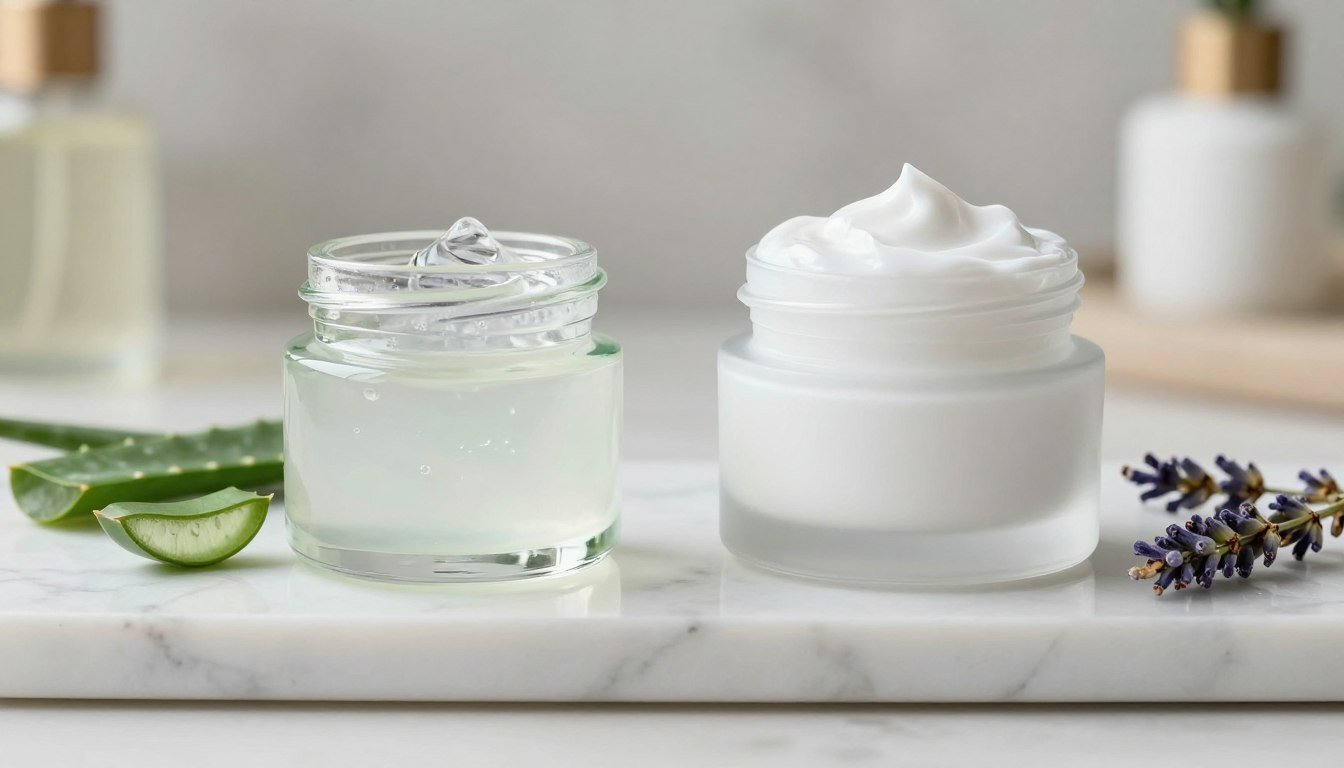
Keeping your skin healthy and glowing starts with hydration. Face products keep your skin’s top layers soft. This makes your skin look healthier and plumper all day.
Walking down the beauty aisle can be confusing with so many choices. A gel moisturizer is light and water-based, great for oily skin. On the other hand, a cream moisturizer is richer and oil-based. It’s perfect for locking in moisture for dry skin.
Knowing what each product does helps you pick the right one for you. By matching the right product to your skin type, you support your skin’s health. Picking the right moisturizer is key to reaching your skincare goals.
Gel vs Cream Moisturizer: What’s the Difference?
Skincare can be tricky, but knowing the difference between gels and creams is key. Both aim to hydrate your skin, but they do it in different ways. The right choice depends on your skin’s needs and how it reacts to different textures.
The Science Behind Gel-Based Hydration
Gel moisturizers are light and cool, thanks to their high water content. They absorb quickly, leaving no greasy feel behind. This makes them great for those who don’t like heavy skincare.
These gels use humectants to pull moisture into your skin’s top layers. They offer a refreshing hydration that won’t clog pores. Perfect for a day-long, non-sticky finish.
The Emollient Nature of Cream Moisturizers
Cream moisturizers, on the other hand, are richer and more substantial. They mix oil and water to soften and smooth your skin. They also help keep moisture in for longer.
Knowing these differences helps you pick the right product for you. Think about what your skin needs and what you prefer. Whether you want the quick hydration of a gel or the deep nourishment of a cream, understanding the science is the first step to better skin hydration.
Gel Moisturizer vs Cream Moisturizer: Which One Should You Use?
Choosing between a gel or cream moisturizer is key to a good skincare routine. Your skin changes with time, so it’s important to listen to it. This way, you can pick the right texture for your skin’s health and comfort.
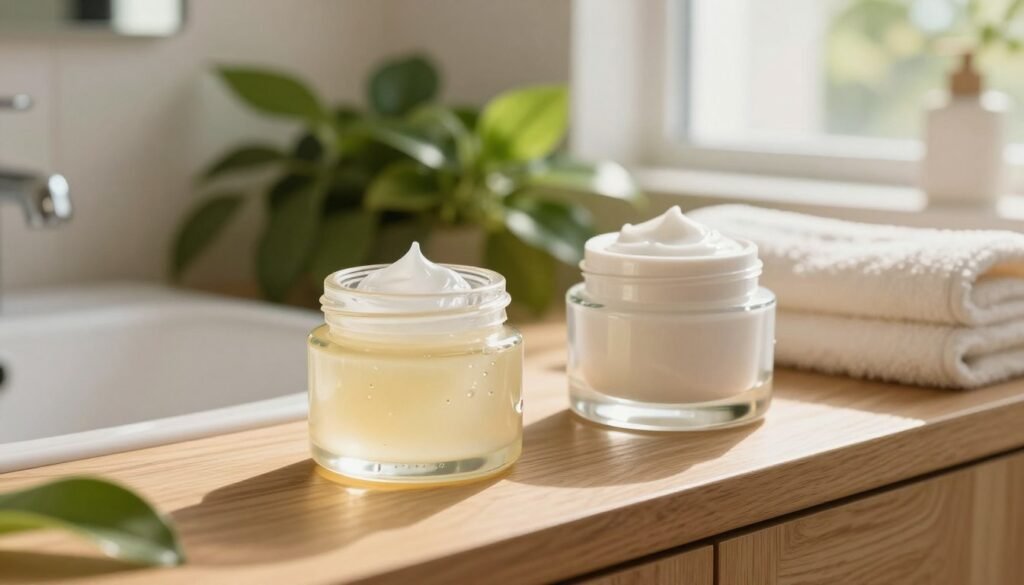
Identifying Your Specific Skin Type Needs
First, know your skin type. If your skin is oily or breaks out a lot, a gel is best. Gels hydrate well without clogging pores or feeling heavy.
If your skin is dry, tight, or dull, you need a cream. Creams deeply nourish and protect your skin. Knowing this helps you create a better skincare plan.
Assessing Environmental and Seasonal Factors
Your environment affects your skin all year. In hot, humid weather, a gel is better than a heavy cream. This is because the air is already moist, making lighter textures more suitable.
In cold, dry weather, your skin loses moisture fast. This is when a cream’s rich, protective qualities are essential. By adjusting your skincare to the season, you keep your skin hydrated all year.
The Benefits of Choosing a Gel Moisturizer
Feeling greasy by midday? A water-based moisturizer can make a big difference. These products hydrate your skin fast, leaving no sticky residue. By picking a gel moisturizer, you skip the heavy, oily feel of thicker creams.
Why Oily and Combination Skin Types Thrive with Gels
Dealing with too much shine? Finding the right oily skin care is tough. Gel moisturizers are made to add moisture without extra oil. They’re great for sebum control all day.
People with acne-prone skin worry moisturizers will cause breakouts. But, gels are usually non-comedogenic, so they won’t clog pores. You can keep your skin balanced and matte while staying soft and healthy.
The Role of Water-Based Ingredients in Lightweight Care
Water-based skincare works magic by hydrating with glycerin or hyaluronic acid. These ingredients draw moisture into your skin without heavy oils. Your face stays hydrated without feeling heavy.
Using a gel moisturizer keeps your skin feeling fresh and comfy. They absorb fast, making them perfect under makeup or sunscreen. Your skin will feel plump and hydrated, not oily or clogged.
The Advantages of Using a Cream Moisturizer
When your skin feels tight and dry, a cream moisturizer can be a lifesaver. These moisturizers are made to deeply nourish your skin. Their thick texture ensures your skin stays comfortable all day.
Deep Hydration for Dry and Dehydrated Skin
For those with dry skin, a heavy-duty cream can be a game changer. It locks in moisture, stopping it from evaporating too fast. This makes your skin feel softer and more elastic.
These creams create a protective layer on your skin. This layer shields your skin from harsh elements that take away natural oils. It helps keep your skin healthy and glowing.
Repairing the Skin Barrier with Rich Emollients
These products are packed with emollient ingredients. These ingredients are key for skin barrier repair. They fill in gaps between skin cells, making your skin smooth.
Using a cream with these ingredients helps restore your skin’s natural balance. It’s like building a strong foundation for your face. This is the best way to fight long-term dryness.
How to Read Ingredient Labels for Better Selection
Mastering the art of reading ingredient lists can improve your skin health. Many find long, scientific names confusing. But, focusing on a few key categories simplifies the process.
By learning to spot specific components, you can pick products that meet your needs. This way, you can choose wisely for your skin.
Identifying Humectants for Instant Moisture
Humectants draw water into your skin’s outer layer. Hyaluronic acid is a well-known example. It holds a lot of water, providing deep hydration.
It’s great for those who need to control sebum. Look for these ingredients at the top of the label. They keep your skin feeling plump and refreshed.
If you have acne-prone skin, choose lightweight humectants. They help avoid heavy textures that can cause breakouts.
Recognizing Occlusives for Long-Term Protection
Occlusives seal moisture in your skin. They create a barrier to prevent water loss. This is key for skin barrier repair if your skin feels tight or irritated.
Always check if a product is non-comedogenic to avoid clogged pores. Ingredients like ceramides and squalane offer long-term protection without being greasy. Finding the right balance keeps your skin healthy and hydrated.
Adapting Your Moisturizer Choice to Changing Seasons
Keeping your skin healthy means changing your skincare with the seasons. Your skin changes with the weather, making seasonal skincare key. By noticing these changes, your face will stay balanced and comfy all year.
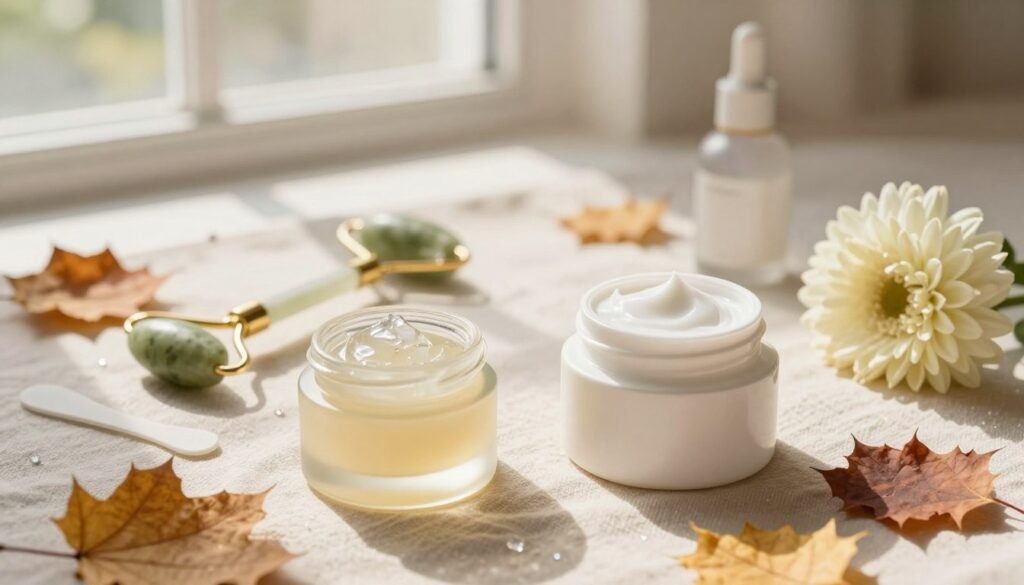
Switching to Gels During Humid Summer Months
In hot, humid weather, your skin makes more oil. A thick moisturizer can clog pores or make you look greasy. A light gel moisturizer keeps your skin hydrated without feeling heavy.
Try chilling your gel moisturizer in the fridge for a cool touch. It cools your skin and keeps it moist after a day in the sun.
Transitioning to Creams for Harsh Winter Conditions
When it gets cold and dry, your skin loses water. Now is the time for a thicker, protective cream. These creams shield your skin from cold and keep moisture in all day.
For dry skin treatment, look for hyaluronic acid in your products. It pulls moisture deep into your skin, keeping it hydrated. Apply your cream when your skin is still damp for better results.
Common Mistakes When Applying Facial Moisturizers
Learning how to apply your moisturizer is as crucial as picking the right one. Even the best products won’t work if you don’t follow a good skincare routine. By improving your technique, your skin will soak up the ingredients as meant.
Applying Product on Dry Versus Damp Skin
Many people apply moisturizer to dry skin. But, for the best results, apply it when your skin is still damp from washing. This step helps keep your skin hydrated, which is key if your moisturizer has hyaluronic acid.
Damp skin soaks up moisture better, keeping your skin hydrated longer. This stops water loss and keeps your skin feeling soft all day. You’ll see a big difference in how soft your skin feels with this change.
Using the Incorrect Amount for Your Skin Needs
Using too much or too little product can upset your skin’s balance. If you have oily skin care issues, too much can feel heavy and clog pores. Too little on dry skin leaves it open to damage.
To get the best results, follow these tips for balanced application:
- Start with a pea-sized amount and add more if needed.
- Apply your non-comedogenic formula in thin, even layers.
- Gently press the product into your skin, don’t rub it.
- Let the moisturizer set for a minute before adding sunscreen or makeup.
Consistency is key to healthy skin. Avoiding these common mistakes lets your treatments work well without clogging pores. Proper application makes your investment in quality products worth it, giving you clear and hydrated skin.
Conclusion
Finding the right face product is a journey that changes with your skin and where you live. Now, you know how to pick between gel and cream moisturizers easily.
Your skin needs a routine that changes with the seasons. You might prefer a light formula from Neutrogena or a thicker one from CeraVe. Remember, how your face feels after use matters a lot.
Learning how to apply moisturizer right is key. Being consistent is the most important part of skincare. By knowing what your skin needs, you keep it healthy and glowing all year.
Check your skincare shelf. Does it still meet your needs? Share your best hydration tips with others to help them on their skincare journey.
FAQ
What is the primary difference between a gel and a cream moisturizer?
The main difference is in their texture and formulation. Gel moisturizers are water-based, lightweight, and oil-free. They quickly disappear into your skin. On the other hand, cream moisturizers have more oils and emollients. They offer a richer, more substantial barrier for deep skin hydration.
How do I know if a gel moisturizer is right for my oily skin?
If you have excess sebum or acne-prone skin, a gel moisturizer is best. Products like Neutrogena Hydro Boost provide hydration without a sticky film. They are non-comedogenic, keeping your skin matte and balanced all day.
Why should I choose a cream moisturizer for dry or dehydrated skin?
For dry skin, cream moisturizers are the top choice. They have occlusives and rich emollients like CeraVe or La Roche-Posay. These ingredients help repair your skin barrier, keeping moisture in and preventing transepidermal water loss.
What are humectants, and why are they important in my skincare routine?
A: Humectants, like hyaluronic acid and glycerin, draw water into your skin. They are key in gel-based hydration. Apply them to damp skin to lock in moisture.
Should I change my moisturizer based on the season?
Yes, your moisturizer needs to change with the seasons. In humid summer months, use a lightweight gel to avoid shine. But in harsh winter conditions, switch to a thicker cream moisturizer to protect against cold, dry air.
What does “non-comedogenic” mean when reading ingredient labels?
A: Non-comedogenic means the product won’t block your pores. It’s great for combination skin or those prone to breakouts. It ensures your targeted treatments work well without making your skin oilier.
Is it a mistake to apply moisturizer to dry skin?
Yes, applying moisturizer to very dry skin is a mistake. For best results, apply it to slightly moist skin after cleansing. This helps hyaluronic acid and other water-based ingredients trap moisture, boosting your skincare routine’s effectiveness.
How much product should I actually be using?
Using the wrong amount can leave your skin under-hydrated or overwhelmed. A nickel-sized amount is enough for your face and neck. If using a rich cream, use less. A fast-absorbing gel might need a bit more for a radiant complexion.