
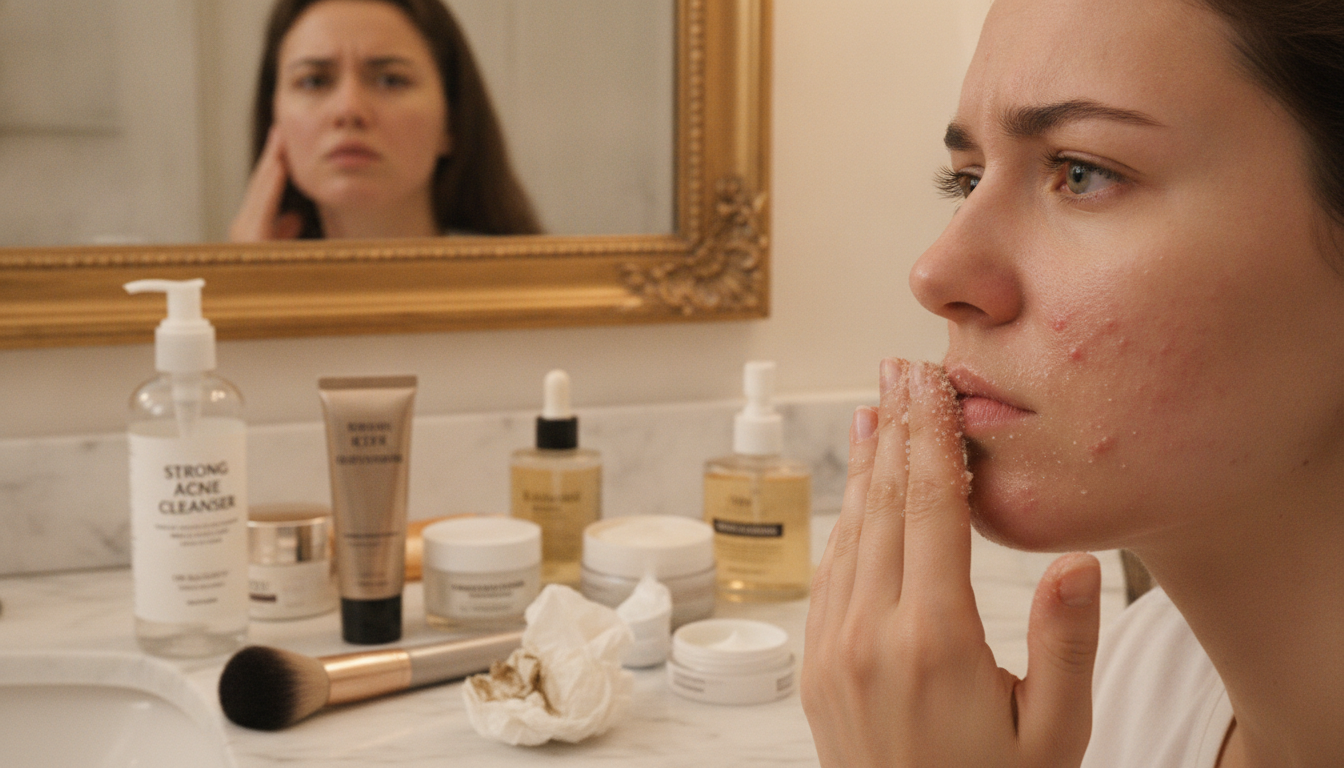
You stick to a strict daily routine, but your skin still breaks out. It’s really frustrating when you spend time and money on products, but they don’t work. Many people unknowingly make the same Acne-Prone Skin Mistakes every day.
The problem might not be your cleanser or serum. It could be how you use them. Using harsh scrubs or skipping moisturizer can harm your skin. This can lead to irritation and inflammation. If your routine is unbalanced, you might see Breakouts Coming Back even when you try your best.
Finding these hidden mistakes is the first step to clear skin. By changing your habits and using the right techniques, you can control your skin’s health. Knowing why your current routine doesn’t work helps you find a better way to care for your face.
Why Breakouts Keep Coming Back
Your journey to clear skin starts with understanding the biological cycle of breakouts. Many people find themselves stuck in a loop where skin issues seem to get better, only to come back. This frustration often comes from a Skin Care Routine that doesn’t tackle the specific, underlying triggers unique to your biology.
Why Acne Often Returns Despite Your Best Efforts
There is no one-size-fits-all Skin Care Routine. Finding the right products is a trial and error process. Even high-quality products can fuel inflammation if they don’t match your skin type. Persistent acne often returns because the root cause—whether it’s hormonal, environmental, or dietary—remains unaddressed.
To break this cycle, you must identify the factors that keep your skin in a state of reactivity. Consider these common barriers to success:
- Inconsistent application of your daily treatments.
- Using products that contain hidden pore-clogging ingredients.
- Failing to adjust your Skin Care Routine based on seasonal changes.
- Overlooking the impact of external factors like stress or sleep quality.
The Psychological Impact of Chronic Skin Issues
Living with chronic breakouts affects your mental well-being and daily confidence. Feeling discouraged when your Skin Care Routine doesn’t work right away is common. This emotional weight can lead to stress, which triggers more hormonal fluctuations and breakouts.
By acknowledging the emotional side of skin health, you can approach your treatment with a more informed and patient mindset. Consistency is your greatest ally in this process. When you treat your skin as a complex system, you gain the patience needed to find the solutions that truly work for you.
Common Acne-Prone Skin Mistakes That Can Keep Breakouts Coming Back
Your current way of dealing with blemishes might actually be making them worse. Many people think the only way to clear their skin is through harsh treatments. But these Acne-Prone Skin Mistakes often cause more irritation, stopping your skin from healing.
Over-treating the Skin with Too Many Active Ingredients
It’s tempting to use many products at once when you see new spots. But using too many active ingredients can harm your skin. This can lead to Breakouts Coming Back because your skin gets inflamed and can’t fight off bacteria.
Using harsh acids, retinoids, and benzoyl peroxide together can damage your skin’s outer layer. This damage makes your skin stressed, leading to more acne. Simplicity is often the most effective strategy for long-term skin health.
Ignoring the Importance of Proper Hydration
Many people think drying out their skin is the best way to fight acne. But this can cause long-term problems. When your skin lacks water, it can’t keep a healthy barrier, leading to more inflammation.
Why Oily Skin Still Needs a Moisturizer
If you have oily skin, you might think you don’t need moisturizer. But skipping it can make your skin produce even more oil. To Avoid Breakouts, your skin needs moisture to stay balanced.
Using a lightweight, non-comedogenic moisturizer is best for oily skin. It keeps your skin hydrated without clogging pores. By keeping your skin balanced, you tell your glands not to overproduce oil. Consistent hydration is a key component of any successful routine for clear, healthy skin.
The Dangers of Over-Cleansing and Harsh Exfoliation
Thinking a squeaky-clean feel is good might harm your skin. If your skin feels tight or dry after washing, it’s lost its protective layer. Follow these Skincare Tips to keep your skin healthy and clear.
How Stripping Your Natural Oils Triggers More Sebum
Your skin makes sebum to stay hydrated and protected. Washing away these oils too much makes your glands work harder. This can make your skin more prone to inflammation and irritation.
The Difference Between Physical Scrubs and Chemical Exfoliants
Many use physical scrubs with microbeads to remove dead skin cells. But, these can cause tiny tears in your skin. This weakens your moisture barrier and lets bacteria in.
Chemical exfoliants are a better choice for most skin types. They break down dead cells gently without harming your skin. This keeps your pores clear without causing damage.
Choosing Gentle Acids Like Salicylic or Lactic Acid
For smoother skin, try gentle acids. Salicylic acid cleans deep into pores. Lactic acid exfoliates gently and hydrates.
Switching to these acids helps Prevent Acne and keeps your skin barrier strong. Stick to these Skincare Tips for a smoother, healthier complexion.
Misunderstanding Non-Comedogenic Labels and Ingredients
Skincare labels can be confusing, making it hard to avoid acne triggers. The term “non-comedogenic” is often used to attract customers. But, it’s not always checked carefully. So, you might end up using products that clog your pores instead of keeping them clear.

Decoding Ingredient Lists for Hidden Pore-Cloggers
To get Clear Skin, you need to look at the ingredient list closely. Ingredients are listed by how much is in the product. If you see thick waxes or oils at the top, it might not be right for your skin.
Watch out for ingredients that can trap dirt and bacteria. These can block your pores and cause breakouts. Knowing these ingredients is key to a healthier face.
Why Natural Oils Can Sometimes Be Your Worst Enemy
Many think “natural” means safe, but it’s not always true. Some natural oils can clog pores. Even if a product is labeled organic, it could still cause acne triggers.
Some natural ingredients that might cause problems include:
- Coconut oil
- Cocoa butter
- Jojoba oil
- Wheat germ oil
- Algae extract
Identifying Comedogenic Ratings in Common Skincare Products
Dermatologists use a scale from 0 to 5 to rate ingredients for pore clogging. A 0 is safe, and a 5 is likely to cause problems. Checking these ratings before buying can save you from trouble.
Learning about these ratings helps you choose better products. You won’t have to guess anymore. You can pick products that help you get Clear Skin without any issues.
Lifestyle Habits That Sabotage Your Skin Health
Your environment affects your skin more than you think. Daily habits can either help or hurt your skin. Knowing these Acne Triggers is key to clear skin.
The Impact of Pillowcase Hygiene and Phone Screens
Many surfaces we touch daily carry bacteria. Pillowcases and phone screens are big culprits. They can spread bacteria and oils to your face.
To avoid breakouts, try these tips:
- Change pillowcases often to keep them clean.
- Use alcohol wipes on your phone screen daily.
- Keep hair back while sleeping to avoid oil transfer.
- Avoid resting your face on your phone during calls.
Dietary Triggers and Their Connection to Inflammation
What you eat shows on your skin. Foods high in sugar and dairy can cause inflammation. This stress can lead to skin problems.
Sweating feeds bacteria on your skin, causing more problems. Eating foods full of antioxidants helps fight these Acne Triggers. Choose whole foods for better skin.
Managing Stress Levels to Reduce Cortisol-Induced Breakouts
Stress makes your body produce more oil, which attracts bacteria. This makes it hard to avoid breakouts when stressed. It’s important to manage stress for your skin’s health.
Try mindfulness, like deep breathing or exercise, to lower stress. These activities help control oil production. Taking care of your mind helps your skin stay healthy.
The Role of Consistency and Patience in Treatment
Creating a good Skin Care Routine is more than just picking the right products. It also needs you to be consistent. Many people get frustrated when they don’t see results right away. But, your skin needs time to adjust to new ingredients.
Knowing how long it takes for your skin to renew is key. It’s one of the most important Skincare Tips for those dealing with breakouts.
Why You Need to Give Products Time to Work
It’s easy to want quick results, but your skin cells take about 6 to 8 weeks to fully renew. During this time, your skin may adjust to new treatments. Patience is your greatest asset in the first two months of a new routine.
If you stop using a product too soon, you cut off the healing process. Your skin needs time to absorb ingredients like retinoids or salicylic acid. By sticking with your products, you give them a chance to improve your skin.
The Pitfalls of Frequently Switching Your Skincare Routine
One big mistake is constantly changing your Skin Care Routine looking for the perfect product. Switching too often can irritate your skin and damage its moisture barrier. Too many new products can overwhelm and inflame your skin.
Instead of always trying new things, take a simple and steady approach. Consistency prevents irritation and lets you see which products really work for you. By sticking to a reliable routine, you give your skin the stability it needs to heal and improve.
When to Seek Professional Dermatological Advice
If you’re struggling with your skin, it might be time to see a dermatologist. While many people handle small breakouts at home, some issues need medical help. Getting help early is key to Acne Prevention, when your skin doesn’t get better with usual treatments.
Recognizing Signs of Hormonal or Cystic Acne
Some breakouts are tougher and deeper than usual pimples. Hormonal acne often shows up on the jawline and chin, getting worse at certain times of the month. Cystic acne is painful, red, and inflamed bumps deep in the skin.
Look for these signs to know when to see a dermatologist:
- Deep, tender nodules that never seem to come to a head.
- Breakouts that leave behind dark spots or permanent scarring.
- Skin conditions like rosacea, which mimics acne but requires specialized medication.
- Persistent inflammation that lasts for weeks without improvement.
The Benefits of Prescription-Strength Treatments
A dermatologist can offer treatments not found in stores. These treatments target the cause of your breakouts, not just the symptoms. With medical-grade ingredients, you can stop acne from coming back and protect your skin.
- Access to high-potency retinoids that speed up cell turnover.
- Oral medications that address internal hormonal imbalances.
- Customized treatment plans tailored to your unique skin type.
- Professional monitoring to ensure your skin stays healthy and hydrated.
When Over-the-Counter Solutions Are No Longer Enough
It’s common to try many products before realizing you need something different. If you’ve followed a routine for three months without seeing results, it’s time to change. Using harsh products for too long can make your skin worse and hinder Acne Prevention.
Don’t wait until you see scarring to get help. A dermatologist can help you Prevent Acne by finding hidden triggers. Getting help early ensures your skin gets the care it needs to heal and improve.
Conclusion
Changing your daily habits is key to lasting results. You can improve your skin by using gentle products and sticking to a routine.
Getting clear skin is a journey that takes time and understanding. Making small changes in your life and what you use on your skin can lead to lasting success.
Listening to your body is crucial for preventing acne. If what you’re doing isn’t working, talk to a dermatologist at Schweiger Dermatology Group.
Experts there can give you advice that fits your needs. They help solve complex skin problems with care and precision.
Stay true to your plan and believe in the process. Your hard work will pay off, leading to the clear skin you want. Keep focusing on your health to keep your acne prevention efforts working for years.
FAQ
Why are my Breakouts Coming Back even though I use acne-fighting products?
A: Breakouts Coming Back often happens because your Skin Care Routine might not tackle the root causes. Your skin has a cycle, and ignoring specific triggers like hormones or a weak skin barrier keeps inflammation going. Stress from skin issues also raises cortisol, making oil production worse and trapping you in a cycle of breakouts.
Is it a mistake to skip moisturizer if I have oily, acne-prone skin?
Yes, trying to “dry out” acne by skipping moisturizer is a big mistake. Depriving your skin of moisture makes it produce more oil, causing clogged pores. Use a light, non-comedogenic moisturizer, like Neutrogena Hydro Boost Water Gel, to keep your skin balanced and protected.
How can I tell if my exfoliation method is actually making my acne worse?
Harsh physical scrubs can damage your skin, spreading bacteria and causing more inflammation. Switch to chemical exfoliants like salicylic acid or lactic acid. Paula’s Choice offers BHA liquid exfoliants that deeply clean pores without harming your skin.
Can “natural” ingredients like coconut oil be hidden Acne Triggers?
Absolutely. Ingredients like coconut oil and cocoa butter can clog pores and trap debris. Look for products labeled as non-comedogenic. For safer options, consider oils with high linoleic acid, like rosehip oil, which are less likely to cause congestion.
What lifestyle changes are most effective for Acne Prevention?
Your environment is key. Keep your pillowcases clean and your phone screen disinfected to avoid breakouts. Managing stress is also crucial, as it can trigger inflammation and undermine your treatments.
How long should I wait before deciding a new Skin Care Routine isn’t working?
Be patient. It takes four to six weeks for your skin to adjust to new products. Switching products too often can irritate your skin. Stick to one routine to see lasting results.
When is the right time to stop DIY treatments and see a board-certified dermatologist?
If you have deep, painful cystic acne or scars, DIY treatments won’t be enough. A dermatologist can offer stronger treatments like Winlevi or Accutane. They’re key for managing hormonal imbalances and preventing skin damage.