
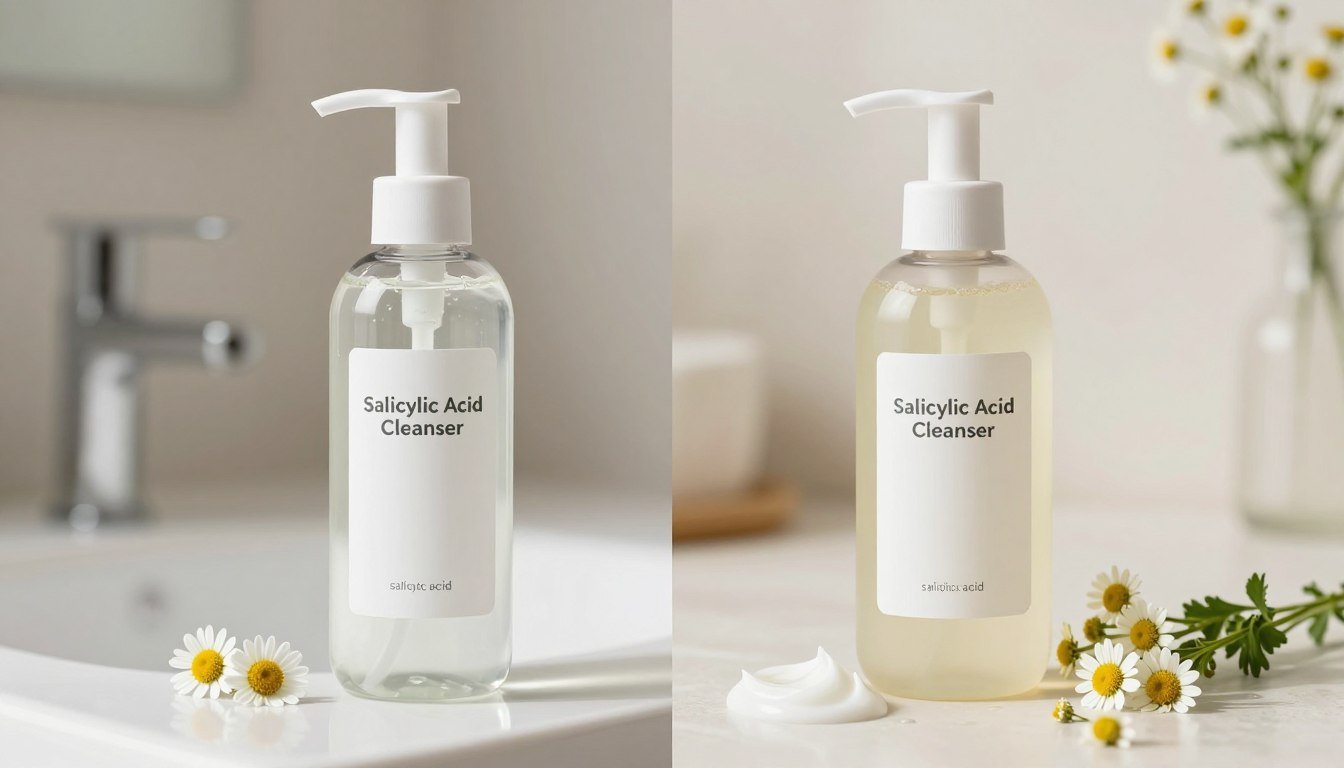
Choosing the right face wash is key to a healthy skincare routine. Many find it hard to pick between a special treatment and a simple daily wash. It’s important to understand the Salicylic Acid Cleanser vs Regular Cleanser debate to get a clear, balanced skin.
Your skin is unique and reacts differently to various ingredients. Some formulas focus on deep exfoliation, while others aim to keep your skin hydrated. Knowing what your skin needs is the first step to long-term health.
Choosing the right product helps avoid irritation and gets the best results. Professional guidance helps you avoid wasting time on products that don’t work. By learning how these products work, you can build a routine that fits your lifestyle.
Whether you fight breakouts or just want a fresh look, the right choice is crucial. It makes a big difference in your daily skincare routine.
Why Skin Cleansing Matters
Washing your face might seem easy, but it’s actually a complex process. It protects your skin’s health. Your skin acts as a shield every day, fighting off the outside world.
To keep it working well, you need to remove the buildup on its surface.
The Importance of a Clean Canvas
Your skin faces many challenges daily, like pollutants, excess oil, and leftover makeup. If these stay on, they can block your pores and cause breakouts. A clean canvas is essential for your skincare to work right.
Cleansing is like getting ready for your skincare routine. It clears the way for your serums and moisturizers to reach deeper. This simple step helps keep your skin bright and clear.
How Cleansers Interact with Your Skin Barrier
Your skin barrier is made of lipids and proteins. It keeps moisture in and bad stuff out. When picking a cleanser, think about how it affects this barrier. Maintaining barrier integrity is key for long-term skin health.
Using harsh cleansers or products with the wrong pH can harm your skin. It can dry out your skin, making it tight and sensitive. Choose formulas that clean without taking away your natural oils.
Salicylic Acid Cleanser vs Regular Cleanser: What’s the Difference?
When you compare a Salicylic Acid Cleanser to a Regular Cleanser, the main difference is in their chemical action. Both aim to clean your skin, but they do it in different ways. This leads to a healthier-looking complexion.
It’s key to know the differences between Salicylic Acid Cleanser and Regular Cleanser to create a good skincare routine. One cleanser is a simple way to refresh your skin. The other changes its texture.
Chemical Exfoliation vs Surface Cleaning
A regular cleanser is mostly a surfactant-based product. It removes dirt, oil, and pollutants from your skin’s surface. It keeps your skin’s natural moisture without going deep into pores.
A salicylic acid cleanser, on the other hand, is a chemical exfoliant. It goes deep into your skin to break down dead cells. This gives you a deeper level of purification than regular cleansers.
Targeting Specific Skin Concerns
Choosing between Salicylic Acid vs Regular Cleanser depends on your skin goals. If you have occasional dryness or balanced skin, a gentle cleanser is enough for daily care.
But, if you have persistent congestion, blackheads, or acne, go for a salicylic acid cleanser. It’s great for managing oil and clearing pores, which is a critical advantage for acne-prone skin.
- Regular cleansers focus on gentle, daily hygiene.
- Salicylic acid cleansers prioritize active pore management.
- Both play vital roles depending on your unique skin needs.
Deep Dive into Salicylic Acid Cleansers
Salicylic acid cleansers are special because they go deep into your pores. They clear out stubborn dirt. This ingredient is oil-soluble, which means it can get into your skin’s lipid layers well. A good salicylic acid cleanser for acne is key for those with clogged pores.
How Salicylic Acid Works on Acne-Prone Skin
Salicylic acid goes through the oil in your pores. It breaks down the “glue” that holds dead skin cells together. This makes it easier for these cells to fall off, preventing new blockages and breakouts.
Benefits of Using Salicylic Acid Cleansers
Using a salicylic acid cleanser can make your skin smoother and clearer. It helps your skin breathe better by removing buildup. Many people see fewer blemishes after a few weeks of using it.
Unclogging Pores and Reducing Inflammation
Salicylic acid also soothes red, irritated skin. It targets the inflammation, making it great for active breakouts. Regular use keeps pores open, reducing blackheads and whiteheads.
Managing Excess Sebum Production
If you have oily skin, these cleansers can help control oil. They balance your skin’s oil, stopping acne-causing bacteria. When looking for the best salicylic acid cleanser, consider these:
- Check the concentration levels to ensure it suits your skin sensitivity.
- Look for secondary soothing ingredients like aloe or ceramides.
- Ensure the formula is non-comedogenic for daily use.
- Evaluate the texture to see if it fits your preference for foaming or gel cleansers.
The Role of Regular Cleansers in Your Routine
Using a regular cleanser for daily use is key to a healthy skin. It acts as a base for your skin to stay balanced. A gentle cleanser helps keep your skin’s barrier strong, not weak.
Gentle Maintenance for Healthy Skin
Healthy skin needs its pH to stay balanced. A mild, non-exfoliating cleanser keeps this balance. It helps your skin stay calm and hydrated.
When to Prioritize Hydrating or Foaming Cleansers
The right cleanser depends on your skin type and environment. Hydrating cleansers are great for dry or sensitive skin. They add moisture and remove dirt. Foaming cleansers are best for oily or combination skin, as they clean deep.
- Hydrating formulas: Best for dry, tight, or dehydrated skin.
- Foaming formulas: Ideal for removing excess sebum and pollutants.
- Balanced formulas: Suitable for normal skin types seeking simple maintenance.
Maintaining Your Natural Moisture Balance
Avoid cleansers that make your face feel tight. A good regular cleanser for daily use should clean without taking away natural oils. Keeping these oils helps prevent dryness and irritation.
Removing Daily Impurities Without Irritation
Cleansing should be effective, not harsh. Massage your cleanser into damp skin for sixty seconds. This method cleanses well while keeping your skin soft and protected.
How to Choose Between Salicylic Acid and Regular Cleanser
Choosing between a medicated wash and a regular cleanser depends on your skin goals. Knowing the difference between Salicylic Acid vs Regular Cleanser helps you create a skin-friendly routine. By checking your skin daily, you can make choices that help your skin stay healthy.
Assessing Your Skin Type and Current Needs
Your skin type is key in picking the right product. If you have oily or acne-prone skin, a medicated wash can help keep pores clean. But, if you have dry or balanced skin, a regular cleanser might be enough.
Think about these points when deciding what you need:
- Oily or acne-prone skin: May need the deep cleaning of salicylic acid.
- Dry or sensitive skin: Usually does well with a hydrating, non-exfoliating cleanser.
- Combination skin: Might need to switch between both types based on the season.
Identifying Signs of Over-Exfoliation
Even the best treatments can harm if used too much. Knowing how to choose between Salicylic Acid and Regular Cleanser means knowing when your skin is too stressed. Look out for redness, tightness, or increased sensitivity.
These signs mean your skin’s moisture barrier is at risk. Ignoring them can cause inflammation and weaken your skin’s defense. It’s important to listen to your skin and adjust your routine as needed.
When to Switch to a Gentler Formula
If your skin is showing signs of distress, it’s time for a change. Switching to a gentle, pH-balanced cleanser helps repair your skin’s natural barrier and soothe irritation. This transition is crucial for your skin’s recovery and keeping it strong.
Focus on long-term skin health by using a mild formula until your skin feels balanced again. Once your skin is back to normal, you can start using active treatments again if needed. Remember, a healthy barrier is the key to a clear and radiant complexion.
Best Practices for Integrating Cleansers into Your Skincare
Getting a glowing skin starts with the right order and use of your skincare products. Organizing your routine lets each product work its best. This keeps your skin healthy and tackles specific issues.
Creating a Balanced Morning and Evening Routine
Your morning routine should wake up your skin and get it ready for the day. Use a gentle cleanser to remove last night’s dirt without taking away natural oils. This makes a good base for your serums and sunscreen.

Evening is for removing makeup, dirt, and extra oil. Use a cleanser with salicylic acid if you need to clean deep pores. Consistency is the key to better skin over time.
Layering Products Effectively After Cleansing
How you apply your products matters a lot. Start with thin products like toners or serums, then move to thicker creams. This helps active ingredients get into your skin well.
Give each product time to settle before adding the next. Rushing can cause problems like pilling or weakening your treatments. Proper layering creates a protective seal that keeps your skin hydrated.
The Importance of Moisturizing Post-Exfoliation
Exfoliating cleansers can dry out your skin. Putting on a good moisturizer right after is key to keep your skin moist. This helps your skin stay strong and soft.
Choose moisturizers with ceramides or hyaluronic acid to calm your skin after exfoliating. Hydration helps avoid irritation and dryness. A well-moisturized barrier protects against sensitivity and dryness.
Conclusion
Choosing the right cleanser is key to better skin health. You now know the difference between deep exfoliation and gentle hydration. This knowledge helps you pick the best cleanser for your skin.
Your skin’s health depends on what it needs. A good balance keeps your skin moist and tackles problems like dryness. La Roche-Posay and Cetaphil have great options for everyone.
Sticking to a skincare routine is crucial. Find a routine that works for you and your skin. This way, you can enjoy a natural glow every day.
Pay attention to how your skin feels after washing. Change your products as needed, like with the seasons. Caring for your skin well leads to lasting beauty and confidence.
FAQ
What are the primary differences between Salicylic Acid Cleanser and Regular Cleanser?
A regular cleanser removes surface dirt and makeup. It doesn’t change your skin’s chemistry. On the other hand, a Salicylic Acid Cleanser is a chemical exfoliant. It uses a Beta-Hydroxy Acid to deeply clean pores, unlike regular soaps.
What are the specific benefits of Salicylic Acid Cleanser for acne-prone skin?
Salicylic Acid Cleanser is great for acne. It breaks down sebum and debris in your skin. This helps unclog pores, reduce inflammation, and prevent future breakouts.
How to choose between Salicylic Acid and Regular Cleanser based on your skin type?
Choose based on your skin’s moisture and sensitivity. For oily or combination skin, a specialized treatment is best. But for dry or sensitive skin, a regular cleanser is better.
What is the best Salicylic Acid Cleanser for someone with sensitive but congested skin?
Look for a balanced formula for sensitive skin. The CeraVe Renewing SA Cleanser is a good choice. It has salicylic acid, ceramides, and hyaluronic acid for gentle exfoliation.
Can I use a Salicylic Acid vs Regular Cleanser every single day?
Regular cleansers are for daily use. But Salicylic Acid Cleansers should be used with caution. Start with 2-3 times a week to avoid over-exfoliation.
Is it necessary to change my moisturizing routine when using a Salicylic Acid Cleanser?
Yes, adjust your routine after using Salicylic Acid Cleanser. It can dry out your skin. Use a good moisturizer to keep your skin hydrated and protected.