
Ultraviolet radiation from the sun causes skin cancer, premature aging, and dark spots. Daily protection is key to long-term health. It’s important to understand how different products work to keep you safe.
This sun protection guide aims to simplify the world of SPF products. We’ll explain the main differences between mineral and chemical sunscreens. This way, you can choose the right products for your skin.
Whether you need a daily moisturizer or heavy-duty protection, knowing the difference is crucial. This guide is perfect for sunscreen for beginners who want to care for their skin. By learning about Mineral vs Chemical Sunscreen, you can find the best fit for your skin and lifestyle.
Sun Protection Basics You Should Know
Learning about sun safety is key to keeping your skin healthy and young. By understanding these sunscreen basics, you can choose the right products for your skin every day.
How Ultraviolet Radiation Affects Your Skin
Ultraviolet radiation from the sun harms your skin at a deep level. It can change your DNA, leading to wrinkles and dark spots.
This damage can also raise your risk of serious health problems, like skin cancer. It’s important to protect your skin to avoid these issues.
The Role of SPF and Broad-Spectrum Protection
When you look for sun protection, you’ll see labels with SPF numbers. SPF shows how well a product blocks UVB rays, which cause sunburns.
But, make sure the product is broad-spectrum. This means it protects against UVA and UVB rays. It’s crucial when comparing sunscreen types.
Why Daily Sunscreen Use is Essential
Many think they only need sun protection on sunny days at the beach. But, UV rays can reach your skin on cloudy days or through windows.
Using sunscreen every day is the best way to keep your skin healthy. By adding these sunscreen basics to your morning routine, you protect your skin from aging too fast.
Mineral vs Chemical Sunscreen: The Core Differences
Understanding the difference between physical and chemical sunscreens is crucial. Both types protect your skin from UV rays but in different ways.
Choosing depends on your skin type and what you prefer. Knowing how they work helps you pick the right one for your daily routine.
How Mineral Sunscreens Work as Physical Blockers
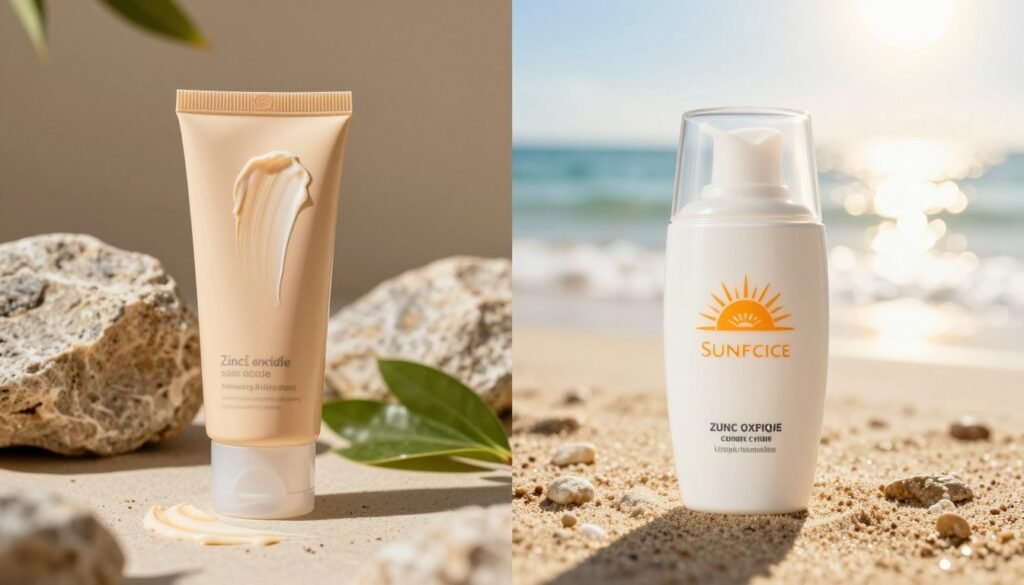
Mineral sunscreens create a protective film on your skin. This film reflects UV rays, preventing them from reaching your skin cells.
They are great for sensitive skin. They start protecting your skin as soon as you apply them.
Key Ingredients: Zinc Oxide and Titanium Dioxide
Zinc oxide and titanium dioxide are the main ingredients. These minerals are ground into fine particles.
Zinc oxide is very effective against UVA and UVB rays. Titanium dioxide is stable and works well with other minerals to prevent skin damage.
How Chemical Sunscreens Absorb UV Rays
Chemical sunscreens work like a sponge. They absorb UV energy and convert it into heat.
This heat is then released from your skin. It prevents radiation from causing damage to your cells.
Common Chemical Filters: Avobenzone, Octisalate, and Homosalate
Chemical sunscreens use synthetic compounds to absorb UV rays. Ingredients like avobenzone, octisalate, and homosalate are common.
Avobenzone is a favorite for blocking UVA rays. Chemical sunscreens are often chosen for their lightweight, invisible finish.
Pros and Cons of Mineral Sunscreen
Choosing the right sunscreen is all about understanding how mineral ingredients work on your skin. These products, known as physical blockers, use zinc oxide or titanium dioxide to protect you from harmful rays. Knowing the mineral sunscreen benefits helps you see if they’re right for you.
Benefits for Sensitive and Acne-Prone Skin
Mineral formulas are a top pick for sensitive skin. They are generally gentler than chemical sunscreens because they don’t absorb into the skin. This makes them great for people with eczema, rosacea, or dry skin.
These ingredients stay on the surface, which means they’re less likely to clog pores or cause breakouts. Dermatologists often suggest them for acne-prone skin. By choosing the right sunscreen, you can keep your skin healthy while staying protected outside.
Common Drawbacks: The White Cast and Texture
Older mineral sunscreens were known for leaving a thick, chalky residue. This “white cast” made them hard to wear under makeup or for darker skin tones. The texture was often described as heavy or pasty, making them less appealing for daily use.
But, thanks to new cosmetic technology, things have changed a lot. Now, many brands offer micronized formulas that blend into the skin better. While some residue might still happen, today’s products feel much lighter and more comfortable for everyday wear.
Best Practices for Application
To get the most out of your mineral sunscreen, apply it right. Since these products sit on top of the skin, you need to apply them thoroughly for full coverage. Here are some tips for the best results:
- Apply a generous amount to all exposed areas of your face and neck.
- Use a tapping motion rather than rubbing to help the product settle evenly.
- Allow the sunscreen to set for a few minutes before applying makeup or moisturizer.
- Reapply every two hours, specially if you are sweating or swimming.
Pros and Cons of Chemical Sunscreen
Exploring skincare, you’ll find chemical formulas offer a unique daily experience. They absorb UV rays and turn them into heat, which is then released from your skin. Understanding these chemical sunscreen advantages is key to enjoying your daily skincare routine.
Advantages of Lightweight and Invisible Formulas
People love these formulas for their beauty. Unlike physical blockers, chemical filters are thin and spreadable. You won’t feel a chalky residue or greasy feeling after use.
These products dry down to an invisible finish, perfect for under makeup. This makes choosing the right sunscreen easier if you want a product that feels like a moisturizer. You get high protection without affecting your skin’s look.
Potential Irritation for Sensitive Skin Types
While the texture is great, be mindful of your skin’s reaction to ingredients. Chemical filters like avobenzone or oxybenzone can sting or cause redness in sensitive skin. If you have contact dermatitis, mineral-based options might be better.
Do a patch test on your inner arm before using a new product on your face. This simple step helps avoid unwanted reactions and keeps your skin calm. Always check the ingredient list if you have specific sensitivities.
Performance in Water and During Physical Activity
Chemical sunscreens are popular among athletes and swimmers for their lasting power. They bond well with the skin, so they don’t wash off easily when you sweat or swim. This makes them great for outdoor activities where you need protection that lasts.
But, remember to follow the manufacturer’s reapplication instructions. Even the most water-resistant formulas will eventually break down under intense sun or friction. Keep these tips in mind when choosing the right sunscreen for your active lifestyle:
- Check the label for water resistance ratings.
- Reapply every two hours during heavy sweating.
- Apply at least 15 minutes before heading outdoors.
- Ensure even coverage on all exposed areas.
Conclusion
Your skin needs the best protection from harmful rays every day. Choosing the right product is a personal journey. It depends on your lifestyle and how sensitive your skin is.
Try brands like EltaMD or La Roche-Posay to find what works for you. This guide is a starting point for your research. It helps you understand how different ingredients affect your skin.
The debate over physical vs chemical sunscreen is important. But the most crucial thing is to apply sunscreen consistently. Whether you pick a mineral blocker or a chemical formula, apply it every two hours.
Look for broad-spectrum labels with SPF 30 or higher for full coverage. Your choice will benefit your skin in the long run. Keep this guide handy as you build your daily routine.
FAQ
What is the main difference in the Mineral vs Chemical Sunscreen debate?
Mineral sunscreens, or physical sunscreens, use Zinc Oxide and Titanium Dioxide. They sit on your skin’s surface and block UV rays. Chemical sunscreens, on the other hand, use compounds like Avobenzone and Oxybenzone. They absorb UV rays, turn them into heat, and then release that heat from your skin.
What are the most significant mineral sunscreen benefits for sensitive skin?
Mineral sunscreens are great for sensitive skin. They don’t penetrate the skin and don’t generate heat. This makes them less likely to cause irritation. Dermatologists often recommend EltaMD or Blue Lizard for sensitive skin.
Why are chemical sunscreen advantages popular for daily use under makeup?
Chemical sunscreens are popular for their lightweight texture and “invisible” finish. They don’t leave a white cast like some mineral formulas do. This makes them perfect for those who want a sunscreen that blends well with their makeup.
How do I go about choosing the right sunscreen for my specific skin type?
The right sunscreen depends on your skin type and daily activities. For oily or acne-prone skin, try Neutrogena Ultra Sheer. For dry skin or children, consider CeraVe or Aveeno. Always choose broad-spectrum protection to cover UVA and UVB rays.
What are the sunscreen basics I should follow for maximum protection?
Use about one ounce of sunscreen on your body. Reapply every two hours or after swimming or sweating. This keeps your skin safe from UV damage and aging.
Can I find physical vs chemical sunscreen hybrids?
Yes, many brands offer hybrid sunscreens. They combine the protection of mineral filters with the ease of chemical ones. These are great for those who want the best of both worlds.