
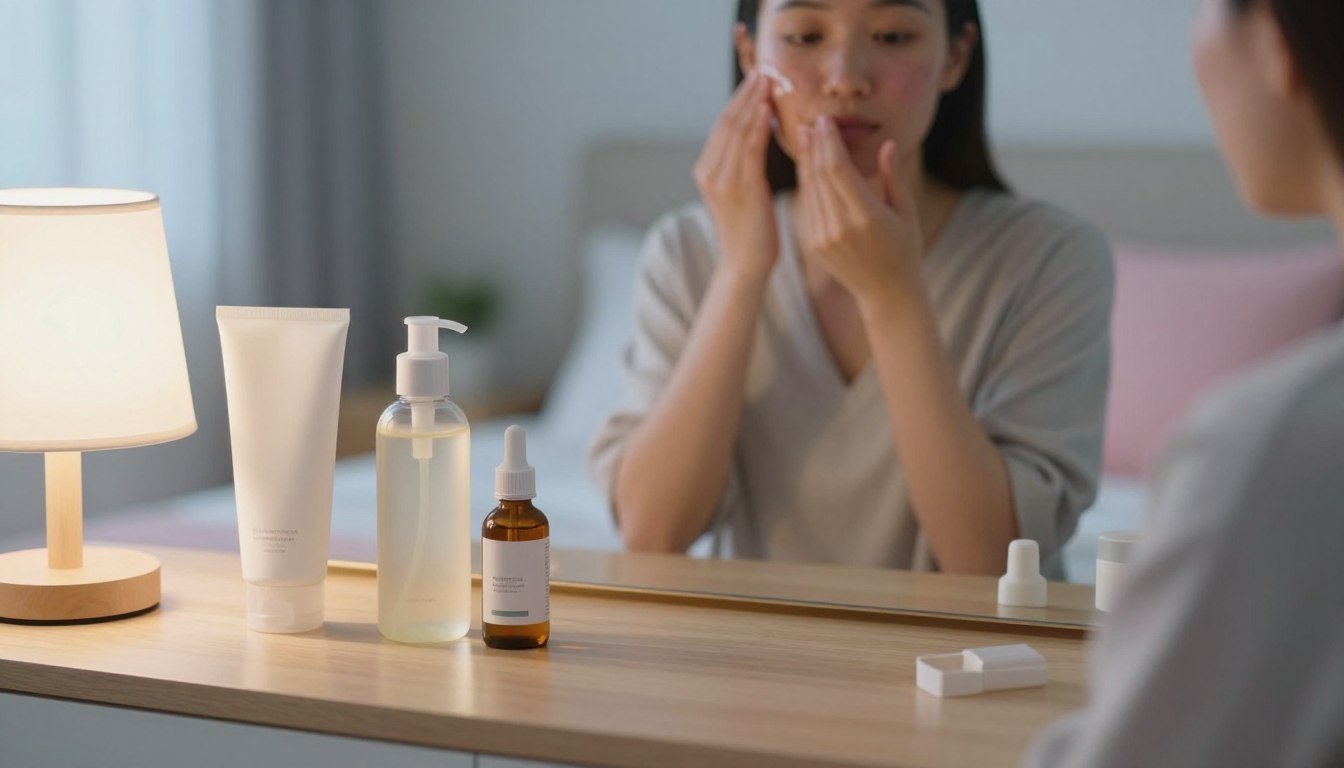
Starting your day with clear pores begins with your bedtime routine. A Night Skincare Routine for Acne-Prone Skin is key to fighting breakouts. It cleanses your skin of daily dirt and oil, making it ready for overnight treatments.
Following a routine helps you clear existing blemishes and prevent new acne. Consistent acne-prone skin care gives your skin the chance to heal. Be patient, as it takes time to see results. Stick to these steps every night for clear, healthy skin.
Why Your Skin Needs Special Care at Night
Your skin changes a lot while you sleep. It’s the best time for it to heal and repair. Having a Night Skincare Routine for Acne-Prone Skin helps a lot during this time.
Why Nighttime is Critical for Acne Healing
While you sleep, your skin gets more blood flow. This brings it the nutrients and oxygen it needs. This is key for skin cell turnover, which is when old cells are replaced by new ones.
Night is the best time to use treatments because your skin isn’t fighting off pollution or UV rays. By cleaning off the day’s dirt, your skin can soak up treatments better. This makes your Night Skincare Routine for Acne-Prone Skin work better and prevent new breakouts.
Identifying Your Specific Acne Triggers
Not all breakouts are the same. Finding out what causes yours is important. Knowing this helps you pick products that calm your skin, not irritate it.
Look out for things that might make your acne worse:
- Comedogenic ingredients in heavy oils or waxes.
- Fragrances and synthetic dyes that cause contact dermatitis.
- High-sugar diets that may trigger hormonal fluctuations.
- Dirty pillowcases that harbor bacteria and oil buildup.
- Stress-induced hormonal spikes that increase sebum production.
Watch how your skin reacts to different products. Choose gentle, non-comedogenic ones that help your skin heal. This way, your night skincare routine will help your skin stay healthy and clear in the long run.
The Foundation of a Night Skincare Routine for Acne-Prone Skin
Your nightly skincare journey starts with two key steps. A consistent routine helps manage breakouts and keeps your skin healthy. A clean canvas is essential for absorbing treatments.

Step One: Gentle Cleansing to Remove Impurities
Cleansing is crucial in your evening routine. It removes pollutants, excess oil, and debris that can clog pores overnight.
Choosing the Right Non-Comedogenic Cleanser
Always choose a non-comedogenic cleanser to keep pores clear. These cleansers are made to clean your skin without causing breakouts.
- Look for “oil-free” or “non-acnegenic” labels.
- Avoid harsh soaps that remove natural oils.
- Choose gel or foam textures for a clean rinse.
Techniques for Proper Makeup and Sunscreen Removal
Removing makeup and sunscreen is key. A single wash may not be enough to prevent buildup.
- Start with an oil-based balm or micellar water to dissolve makeup.
- Then, use a water-based cleanser to remove remaining impurities.
- Massage the cleanser for sixty seconds.
- Rinse with lukewarm water to avoid irritation.
Step Two: Balancing the Skin with Toner
After cleansing, your skin may feel tight or unbalanced. A good alcohol-free toner helps restore your skin’s natural pH and removes any remaining debris.
Selecting Alcohol-Free Formulas
Traditional toners often contain drying alcohols. Using an alcohol-free toner is better for your skin’s health.
Choose toners with soothing ingredients like witch hazel, niacinamide, or green tea extract. These ingredients calm inflammation and prepare your skin for the next steps.
Targeted Treatments for Active Breakouts
Managing acne needs a smart plan with strong ingredients. Choose the right acne-fighting actives to clear blemishes and improve skin texture.
Applying Acne-Fighting Actives
Being consistent is crucial when using special treatments. These products go deep into the skin. They stop new acne before it appears.
Using Salicylic Acid for Pore Clearing
Salicylic acid is a top choice for clogged pores. It breaks down the dirt and oil in your pores.
It’s oil-soluble, so it gets deep into pores. Regular use keeps your skin clear and stops future blockages.
Incorporating Benzoyl Peroxide for Bacteria Control
Benzoyl peroxide kills acne-causing bacteria fast. It introduces oxygen into pores, making it hard for bacteria to live.
Apply it only to affected areas to avoid dryness. Start with a low concentration to see how your skin reacts.
The Role of Retinoids in Long-Term Skin Health
Retinoids are key for long-term skin health. They help cells turn over and prevent future breakouts. They also clear pores and improve skin tone.
Adding these to your routine can change your skin for the better.
How to Introduce Adapalene or Tretinoin Safely
Adapalene is a good choice for many skin types. Start with a small amount, two or three times a week.
Your skin might go through a purging phase at first. This is normal as it clears deep-seated congestion.
Always moisturize after using these treatments. Be patient, as results take weeks to show.
Hydration and Barrier Repair
Did you know your skin needs moisture to heal from acne? Many think skipping moisturizer for acne-prone skin stops breakouts. But, not using moisturizer can make your skin produce more oil, causing more clogged pores and inflammation.
Why Acne-Prone Skin Still Needs Moisturizer
Without water, your skin gets stressed. This stress makes your sebaceous glands work harder, producing more sebum. Keeping your skin hydrated is key to controlling oil and maintaining a healthy look.
Selecting Lightweight, Oil-Free Moisturizers
Finding the right moisturizer is crucial to avoid a greasy feel. Look for products labeled as non-comedogenic. These moisturizers add moisture without clogging pores or causing new blemishes.
Locking in Moisture Without Clogging Pores
Your nighttime routine should focus on sealing in hydration after treatments. A protective layer helps your skin recover from acne medications. This keeps your face calm and balanced all night.
Ingredients to Look For: Hyaluronic Acid and Ceramides
When picking your nighttime cream, look for specific ingredients that support skin health. These ingredients work together to hydrate and protect your delicate moisture barrier:
- Hyaluronic acid benefits include drawing moisture into the skin, providing deep hydration without oils.
- Ceramides for skin barrier repair are essential, strengthening your skin’s natural defenses against stress.
- Using these ingredients together soothes irritation from acne treatments.
Common Mistakes to Avoid in Your Routine
Even the most expensive acne treatments can fail if you fall into common skincare traps. It’s important to use products that are backed by dermatology. This ensures your skin heals instead of suffering. By avoiding these common errors, you can protect your skin and reach your goals faster.
Over-Exfoliating and Damaging the Skin Barrier
Many people think scrubbing their face harder or using acids daily will clear acne faster. But, over-exfoliating skin can strip away natural oils. This can lead to increased redness, stinging, and more breakouts.
Your skin needs time to recover between treatments. If your face feels tight or looks shiny in an unhealthy way, you’re exfoliating too much. Try exfoliating just two or three times a week to let your barrier heal.
Mixing Incompatible Active Ingredients
It’s tempting to layer every potent serum you own to fight acne. But, this can cause chemical reactions. Combining ingredients like benzoyl peroxide and retinol can lead to severe irritation if your skin is not acclimated.
Strategic layering is key to a successful routine. If you’re unsure about a combination, consult a dermatologist or stick to a simple, proven regimen. Avoiding unnecessary mixtures prevents inflammation and keeps your skin calm.
The Importance of Consistency and Patience
The biggest hurdle in any regimen is the lack of skincare consistency. Skipping nights or switching products every few days prevents your skin from adjusting. You must stick to your routine for several weeks to see real, lasting changes in your skin texture.
True acne treatment patience is essential because skin cells take time to turn over. Do not get discouraged if you do not see perfect results after just a few days. By staying committed to your nightly steps, you provide your skin with the stability it needs to clear up and stay healthy.
Conclusion
Getting your skin to look its best takes dedication to a nightly skincare routine. By following these steps, you can greatly improve your skin’s health. Every small action you take each day helps build a strong foundation for clear and confident skin.
While you sleep, your skin is hard at work, renewing itself. Giving it the right care lets your pores breathe and your skin’s barrier to heal. A good night skincare routine is like a shield, protecting your skin from future breakouts.
Be patient with your skincare journey. It may take weeks to see results from products like CeraVe or La Roche-Posay. Keep believing in the process as your skin gets used to new ingredients and goes through its natural cycle.
See your night skincare routine as a way to take care of yourself, not just a task. It’s good for your mind as well as your skin. Begin tonight and watch your skin flourish with the care it needs.
FAQ
How long will it take to see visible results from a new night skincare routine for acne-prone skin?
Seeing results from a new skincare routine takes time. It can take up to 40 days for your skin to fully respond. You should wait at least four to six weeks to notice changes. Remember, being consistent is key. Skipping nights can slow down the healing process and delay the clearing of blemishes.
Is a double cleanse truly necessary if I do not wear heavy makeup?
Yes, a double cleanse is crucial, even without makeup. It helps remove water-resistant sunscreen and pollutants from the day. Start with a micellar water or a non-comedogenic cleansing balm. Then, use a gentle water-based cleanser like La Roche-Posay Effaclar. This way, your active ingredients can reach your pores effectively.
What is “skin purging,” and how do I know if my new retinoid is working?
A: Skin purging happens when strong actives like Differin (Adapalene) speed up cell turnover. This can make clogged pores appear, leading to more breakouts. If your skin is adjusting to a retinoid, keep using it. This process will eventually improve your skin texture and clarity.
Why should I apply moisturizer if my skin already feels oily?
Not using moisturizer can make your sebaceous glands produce more oil. This can cause more pore blockages. Use a lightweight, oil-free moisturizer with hyaluronic acid and ceramides, like CeraVe PM Facial Moisturizing Lotion. It keeps your skin barrier healthy without clogging pores.
Can I use salicylic acid and benzoyl peroxide in the same evening?
Using both acne-fighting actives at once can cause excessive dryness and skin irritation. It’s better to alternate nights or use a salicylic acid cleanser followed by a benzoyl peroxide spot treatment like Neutrogena On-the-Spot. Apply it only to specific inflamed blemishes.
How do I know if I have over-exfoliated my skin?
Signs of over-exfoliation include redness, a stinging sensation, and skin sensitivity. If you see these, stop using chemical exfoliants like Paula’s Choice 2% BHA Liquid Exfoliant. Instead, focus on barrier repair with soothing ingredients like niacinamide and panthenol.
Should I use an alcohol-based toner to “dry out” my acne?
Avoid alcohol-based toners as they can harm your skin. They can strip it of essential lipids and cause micro-tears or irritation. Choose alcohol-free toners with witch hazel or rose water to balance your pH levels and keep your skin calm.