
Finding the right cleanser is key to your daily beauty routine. If you have acne, picking the right product is crucial. The market is full of choices, making it hard to decide.
To find the best face wash for acne, you need to know what you need. Look beyond the marketing and focus on ingredients that fight inflammation and block pores. Choosing the right ingredients helps you control your skin health.
Keeping up with a daily skincare routine is the best way to get clear skin. Using quality ingredients helps your skin stay healthy while removing dirt. With the right face wash, you can make your routine a powerful tool for clear skin and confidence.
Know Your Skin Type Before Choosing a Face Wash
Starting your journey to clearer skin means knowing your skin type. Choosing the right face cleanser for acne-prone skin is not the same for everyone. Your skin’s biology affects how it reacts to the world around it.
Knowing your skin type helps you avoid products that might irritate or dry out your skin. This knowledge is key to creating a skincare routine that supports your skin, not hinders it.
Identifying Your Primary Skin Concerns
To find the best treatment, first figure out if your skin is oily, dry, or a mix. Oily skin feels slick and shiny, often in the T-zone.
If your skin feels tight or flaky, it’s likely dry. Many cleansing products for oily skin can be too harsh for sensitive or combination skin.
The Role of Sebum Production in Breakouts
Sebum is the natural oil that keeps your skin moist and protected. Too much of it can mix with dead skin cells and clog pores.
This mix creates a perfect spot for bacteria to grow, leading to acne. An effective face cleanser for acne-prone skin helps control oil levels without drying out your skin.
Key Ingredients to Look for in Acne-Fighting Cleansers
When you look for skincare for acne-prone skin, the ingredients matter most. Many cleansers claim to clear your skin, but only certain ingredients can really do it. Knowing which ones to look for can help you choose better.
Benefits of Salicylic Acid for Pore Clearing
Salicylic acid is a beta-hydroxy acid that’s great for oily and clogged skin. It’s oil-soluble, so it goes deep into pores to break up dead skin cells. This helps prevent future blockages and keeps your skin feeling smooth.
Using Benzoyl Peroxide to Target Bacteria
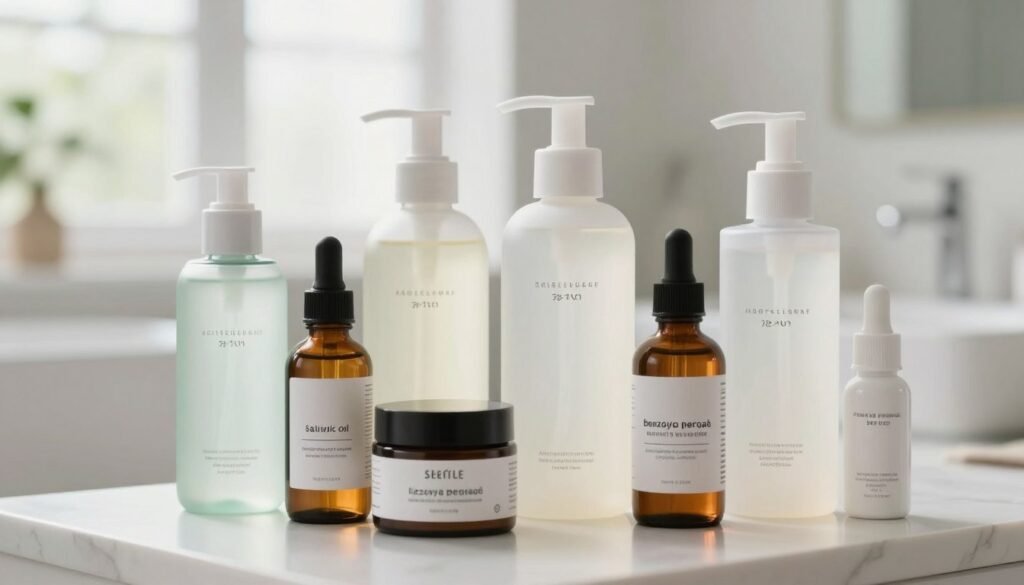
If you’re dealing with active, red breakouts, benzoyl peroxide is key. It introduces oxygen into pores, killing acne-causing bacteria. It’s a must-have in many top acne treatments to reduce redness and stop new breakouts.
Gentle Exfoliation with Glycolic and Lactic Acids
Alpha-hydroxy acids like glycolic and lactic acid exfoliate the surface of your skin. They remove dead skin cells that can clog pores and cause irritation. Using these acids in an effective face wash for acne can make your skin clearer and brighter over time.
To sum up, here’s what these ingredients do:
- Salicylic Acid: Deep pore cleansing and debris removal.
- Benzoyl Peroxide: Powerful antibacterial action against active acne.
- Glycolic Acid: Surface exfoliation for improved skin texture.
- Lactic Acid: Gentle brightening and hydration support.
How to Choose a Face Wash for Acne-Prone Skin
Finding the right face wash for acne-prone skin is all about knowing what you need. What works for someone else might not work for you. So, it’s important to focus on your own skin’s needs. This way, you can find a face wash that clears your skin without harming it.
Evaluating Your Skin Sensitivity Levels
Before trying a new face wash, check how your skin reacts to things. If your skin feels tight, itchy, or red after washing, it might be sensitive. Look for face washes with soothing ingredients instead of harsh chemicals.
Try a patch test on your inner arm before using a new face wash on your face. This helps you see if you’ll have a reaction. If you feel stinging or burning, switch to something milder and fragrance-free right away.
Selecting Between Gel, Foam, and Cream Cleansers
The type of face wash you choose affects how it works with your skin. Each type has its own benefits based on how oily or dry your skin is. Here’s a quick guide to help you pick the right one:
- Gel Cleansers: These are clear and light, great for oily or combination skin.
- Foam Cleansers: They create a lot of foam to remove excess oil and dirt.
- Cream Cleansers: These are soft and moisturizing, best for dry or sensitive skin.
Checking for Non-Comedogenic Labels
When picking a face wash for acne-prone skin, check the label for non-comedogenic. This means the product won’t clog your pores. It’s key to stop new breakouts while treating old ones.
Many products have oils or waxes that can block pores. Choosing non-comedogenic ones helps keep your skin healthy. Always check the ingredients to make sure the product is light and breathable.
Ingredients and Formulations to Avoid
Choosing the right cleanser means knowing what to avoid as much as what to include. When looking for a dermatologist recommended face wash for acne, don’t just look at the front of the bottle. Many common additives can harm your skin barrier and cause more irritation.
Why Fragrances and Essential Oils Can Trigger Inflammation
Fragrances and essential oils often cause skin sensitivity. They might smell nice, but they can lead to contact dermatitis or redness in those with acne. Inflammation is a primary driver of acne, so adding irritants can worsen breakouts.
Opt for products labeled as fragrance-free instead of unscented. Unscented products might still have fragrances that can cause reactions. Simple, clean formulas are best for sensitive skin.
Avoiding Harsh Sulfates That Strip Natural Moisture
Harsh sulfates, like sodium lauryl sulfate, create a lot of lather but take away too much moisture. When your skin is dry, it may produce more oil, clogging pores.
A good dermatologist recommended face wash for acne uses milder surfactants. These clean without drying out your face. Keeping your skin’s moisture balance is key for long-term health. Always check the ingredients for harsh agents before buying.
The Dangers of Over-Exfoliating Physical Scrubs
Physical scrubs have jagged particles that can tear your skin. These tears weaken your skin barrier, letting bacteria in. Scrubbing active breakouts can also spread bacteria, causing more spots.
Instead of harsh physical exfoliation, look for chemical alternatives. Avoiding physical scrubs prevents skin damage and keeps your skin calm. Gentle, consistent care is better than aggressive scrubbing for acne.
Establishing a Consistent Cleansing Routine
Clear skin is more than just the right product. It needs a steady routine. Using acne face wash tips helps keep your skin balanced and breakouts under control. A consistent routine keeps your pores clean and free from oil all day.
The Importance of Twice-Daily Cleansing
Washing your face twice a day is key for healthy skin. It removes dirt, makeup, and oil from the day and night. Avoid over-cleansing to keep your skin’s natural barrier intact.
Proper Techniques for Rinsing and Drying Your Face
How you clean your skin is as important as the product you use. Avoid harsh scrubbing or rubbing, as it can irritate your skin. Here’s how to care for your skin:
- Use lukewarm water to rinse, as hot water can dry out your skin.
- Apply your cleanser with gentle, circular motions using your fingertips.
- Pat your face dry with a clean, soft towel instead of rubbing it.
- Ensure your towel is changed frequently to avoid transferring bacteria back to your face.
Integrating Moisturizers to Balance Acne Treatments
Many acne treatments can dry out your skin. Using a moisturizing face wash for acne prone skin or a non-comedogenic moisturizer after washing is crucial. This keeps your skin hydrated without clogging pores.
A good moisturizer supports your skin’s barrier, often weakened by acne treatments. Hydration prevents oil overproduction when skin feels tight or dehydrated. Choose lightweight, oil-free formulas for a clear and comfortable complexion.
Conclusion
Choosing the right face wash is the first step to clearer skin. You now know how to pick the right ingredients for your skin.
CeraVe and La Roche-Posay are great brands for your skin. They help keep your skin healthy and fight breakouts. Remember, your daily routine is key to their success.
Being patient is crucial for better skin. Stick to your skincare routine every day. Watch how your skin changes over time.
If your skin gets irritated or dry, change your approach. You can improve your skin health with the right choices and habits. Begin your journey to clear skin today by following these tips.
FAQ
How to Choose a Face Wash for Acne-Prone Skin that won’t cause more breakouts?
Look for face washes labeled as non-comedogenic. This means they won’t clog pores. Choose products with Salicylic Acid or Benzoyl Peroxide for acne-prone skin. La Roche-Posay Effaclar Medicated Gel Cleanser is a good choice. It targets oil without being too harsh.
Which ingredients are found in a dermatologist recommended face wash for acne?
Dermatologists often recommend products with Beta-Hydroxy Acids (BHAs) like Salicylic Acid. This acid goes deep into pores. For inflammatory acne, Benzoyl Peroxide in products like PanOxyl Acne Foaming Wash is effective. Alpha-Hydroxy Acids (AHAs) like Glycolic Acid are great for exfoliating the skin’s surface.
Is a moisturizing face wash for acne prone skin necessary if I have oily skin?
Yes, keeping your skin barrier healthy is key. Harsh face washes can make your skin produce more oil. CeraVe Acne Foaming Cream Cleanser balances Benzoyl Peroxide for breakouts and ceramides for moisture. This prevents dry, irritated skin.
What are some essential acne face wash tips for daily application?
Cleanse your face twice a day—morning and night. Avoid harsh scrubs and tools that can spread bacteria. Use your fingertips in a circular motion for 60 seconds. Then, rinse with lukewarm water and pat dry with a soft towel.
Why should I avoid fragrances and sulfates in my skincare products for acne prone skin?
Fragrances and essential oils can cause inflammation and allergic reactions. This can make acne look worse. Harsh sulfates strip away natural lipids, making your skin unhealthy. Choose sulfate-free products like Cetaphil or Neutrogena to avoid irritation.
Can I use multiple active ingredients in my cleansing routine?
Using too many products can harm your skin barrier. If you use a strong treatment like Adapalene, choose a gentle face wash. Introduce new ingredients one at a time to see how your skin reacts.