
You bought the latest serum, hoping for a radiant glow. Instead, you face unexpected irritation or blemishes. Dealing with new skincare routine reactions can feel incredibly frustrating when you only wanted better results.
Understanding these changes is vital for long-term health. Sometimes, spots signal an adjustment phase where the dermis clears itself. Other times, the formula simply does not suit the individual.
Distinguishing between purging and irritation helps you decide whether to continue or stop usage. This guide explores how to identify root causes and provides actionable steps to restore balance to the complexion.
Purging vs Breakout: How to Tell the Difference
It’s important to know if your skin is just adjusting or reacting badly to a new product. A breakout can be a sign of change, but it’s key to understand why. Knowing the skincare breakout reasons helps you decide if you should keep using the product or stop.
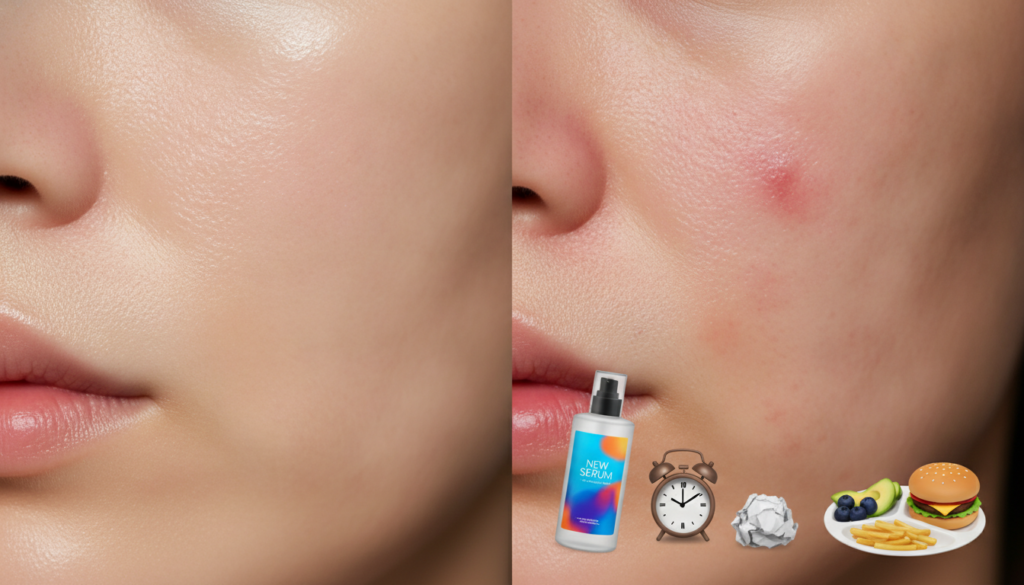
What is Skin Purging?
Skin purging happens when new products speed up your skin’s natural renewal. This brings hidden dirt and clogs to the surface quickly. These hidden problems look like sudden blemishes.
Purging is a good sign that your treatment is working. It often happens with products like retinoids, AHAs, or BHAs. After the dirt is gone, your skin usually looks smoother and brighter.
Signs Your Skin is Actually Breaking Out
A breakout is different from purging and can be caused by stress, hormones, or heavy makeup. Unlike purging, it doesn’t mean your skin is getting cleaner. It’s a sign that something is wrong.
Redness, itching, or burning are signs your skin is reacting badly. If you notice these, it means the product is not right for you. It’s a sign to stop using it.
How to Tell the Difference Based on Location and Timing
Timing is key to figuring out if it’s purging or a breakout. Purging starts a few days after starting a new product and lasts about four to six weeks. If your skin problems last longer, it’s likely a breakout.
Where the blemishes appear also gives clues. Here’s what to look for:
- Purging: Blemishes show up in areas where you usually get them.
- Breakouts: Pimples pop up in new places.
- Irritation: Redness and bumps spread where you applied the product.
By watching these signs, you can make smart choices for your skin. Always listen to what your skin is telling you. Your comfort is more important than sticking to a new routine.
Why Your Skin Breaks Out After Starting a New Product
Starting a new skincare product can be a risk for your skin. You might hope for a glowing complexion but end up with irritation. It’s key to understand why this happens to keep your skin healthy.
The Role of Comedogenic Ingredients
Comedogenic ingredients are a common skin breakout cause. These ingredients block your pores, trapping oil and dirt. This can lead to whiteheads or blackheads as bacteria multiply.
Compromised Skin Barrier Function
Your skin barrier protects you from the outside world and keeps moisture in. Harsh chemicals or alcohol in new products can damage this barrier. A damaged barrier causes redness, stinging, and sensitivity.
Allergic Reactions and Contact Dermatitis
At times, your skin reacts to certain ingredients, not just clogged pores. This is called contact dermatitis, an immune response to an allergen. Symptoms can appear right away or after a few days.
Identifying Symptoms of an Allergic Response
Look out for signs of an allergic reaction. Symptoms include intense itching, burning, and raised, bumpy rashes. If you see these, stop using the product to let your skin heal.
Over-Exfoliation and Chemical Overload
Using too many active ingredients at once can cause problems. This can lead to a new product acne trigger from chemical overload. It overwhelms your skin, causing inflammation and breakouts.
Start with one new product at a time to see how your skin reacts. A simple routine helps you pinpoint the cause. Being patient is the best way to achieve healthy skin.
Identifying Common Ingredients That Trigger Reactions
Start by looking at the ingredients in your skincare products. Many people get skin reactions because they don’t know about certain ingredients. By checking the ingredient list, you can avoid products that might upset your skin.
Fragrances and Essential Oils
Fragrances and essential oils often cause skin problems. Even if a product smells good, these can make your skin inflamed. Look for fragrance-free labels if you get redness or itchiness.
Heavy Silicones and Mineral Oils
Heavy silicones and mineral oils can lead to acne. They lock moisture in but can also trap dirt and oil. This can cause breakouts.
Active Ingredients That Cause Sensitivity
Strong actives can change your skin, but they need time to adjust. Introducing them too fast can cause irritation. It’s important to understand how they work before using them.
Retinoids and Vitamin A Derivatives
Retinoids are great for aging skin, but they can be harsh at first. Your skin needs to get used to them. Start with a low dose and use them a few times a week.
Alpha and Beta Hydroxy Acids
Alpha and beta hydroxy acids help remove dead skin. But using them too much can hurt your skin’s moisture barrier. Too much exfoliation can cause stinging, redness, and damage.
How to Manage and Soothe Irritated Skin
Dealing with unexpected skin reactions can be stressful. But, following a few simple steps can help you regain control. When you experience skincare product sensitivity, your goal is to calm the inflammation and protect your moisture barrier. Acting quickly can minimize the reaction and restore your skin’s health.
Immediate Steps to Take When a Reaction Occurs
If you notice sudden redness, itching, or burning, stop using the new product right away. Gently rinse your face with lukewarm water to remove any remaining residue. Avoid scrubbing or using harsh cleansers, as they can further damage your skin.
Simplifying Your Skincare Routine
Once the initial reaction is under control, simplify your routine. Remove all active ingredients like retinoids, acids, or vitamin C serums. Use a gentle, fragrance-free cleanser and a simple, non-comedogenic moisturizer to help your skin heal.
Ingredients That Help Calm Inflammation
Using the right soothing agents can speed up your recovery. Look for products that focus on hydration and barrier repair. These ingredients reduce redness and restore your skin’s natural balance.
The Benefits of Centella Asiatica and Ceramides
Centella Asiatica and ceramides are effective for calming reactive skin. They provide essential support for your skin’s health:
- Centella Asiatica: Known for its powerful anti-inflammatory properties, it helps soothe redness and promotes faster healing.
- Ceramides: These lipids act as the “glue” that holds your skin cells together, effectively repairing a damaged barrier.
- Combined Effect: Using both together creates a protective shield that locks in moisture while preventing further irritation.
When to Consult a Dermatologist
While most minor reactions resolve within a few days, some situations require professional attention. Seek advice from a dermatologist if you notice signs of infection, such as swelling, oozing, or intense pain. Also, if symptoms persist after a week of gentle care, you need expert guidance to manage your product-induced skin irritation effectively.
Conclusion
Getting a healthy face is all about patience and paying attention. You can change your skincare by listening to your skin every day.
Preventing breakouts starts with being careful with new products. Try one new thing at a time to see how your skin reacts. This simple step helps avoid irritation and keeps your skin healthy.
Being consistent is key in skincare. You need to balance wanting quick fixes with taking care of your skin for the long run. Choose gentle care over harsh treatments for a natural glow.
Getting advice from a dermatologist is the best move for tough skin problems. They give you advice that fits your skin type. You should have a skincare plan that boosts your confidence and keeps your skin looking great.
Share your skincare stories in the comments below. Your experiences can help others find better skin care. Tell us about the gentle cleansers or soothing serums that worked for you.
FAQ
What are the primary skincare breakout reasons when I start using a new facial oil or cream?
Breakouts can happen for two main reasons. Either your skin is purging or reacting badly to the product. If it’s purging, it might be because of ingredients like Salicylic Acid or Retinol. These can make your skin clear up by bringing out existing problems.
But, if your skin is breaking out because of a new product, it might be because of heavy ingredients that clog pores. This is known as comedogenic ingredients.
How can I distinguish between a temporary purge and a negative new product skin reaction?
To tell if it’s a purge or a bad reaction, look at where and how long the blemishes last. Purges usually happen in places where you already get pimples and go away in four to six weeks.
If you’re getting small, red bumps or whiteheads in new places, or if your skin is stinging and itching, it’s likely reacting badly to the product.
What is the most common new product acne trigger I should look for on ingredient labels?
Look out for ingredients like Isopropyl Palmitate, Algae Extract, or certain Coconut Oil derivatives. These can block pores, leading to trapped sebum and bacteria. If you have oily or acne-prone skin, choose products labeled “non-comedogenic” to avoid breakouts.
Why am I developing skincare product sensitivity to items that contain “natural” ingredients?
A: Sensitivity to “natural” ingredients like essential oils and synthetic fragrances is common. These can disrupt your skin’s barrier and cause irritation. Even high-end products with botanicals can cause redness if your skin reacts to them.
What are the underlying skin breakout causes related to using too many active ingredients at once?
Over-exfoliation is a big reason for breakouts. Using too many strong products can strip your skin of its protective layer. This makes it easier for bacteria to get in and causes inflammation and sensitivity.
What steps can I take for skincare breakout prevention when introducing a new serum?
Start with a “patch test” to check for any bad reactions. Apply a small amount to a discreet area for 24 to 48 hours. Also, introduce new products one at a time, two weeks apart, to see which one causes problems.
How should I treat product-induced skin irritation once it has already started?
If your skin is irritated, stop using all active treatments. Use a gentle cleanser and a moisturizer with ceramides or hyaluronic acid to help it heal. Avoid scrubbing your face and see a dermatologist if the irritation doesn’t get better in a week.
Can a new skincare routine reaction cause my skin to feel tight and dry instead of oily?
Yes, a new skincare routine can make your skin feel tight and dry. This is a sign that the product is too harsh or that you’re having an allergic reaction. Look out for products with Benzoyl Peroxide or alcohol-based toners that can dry out your skin.