
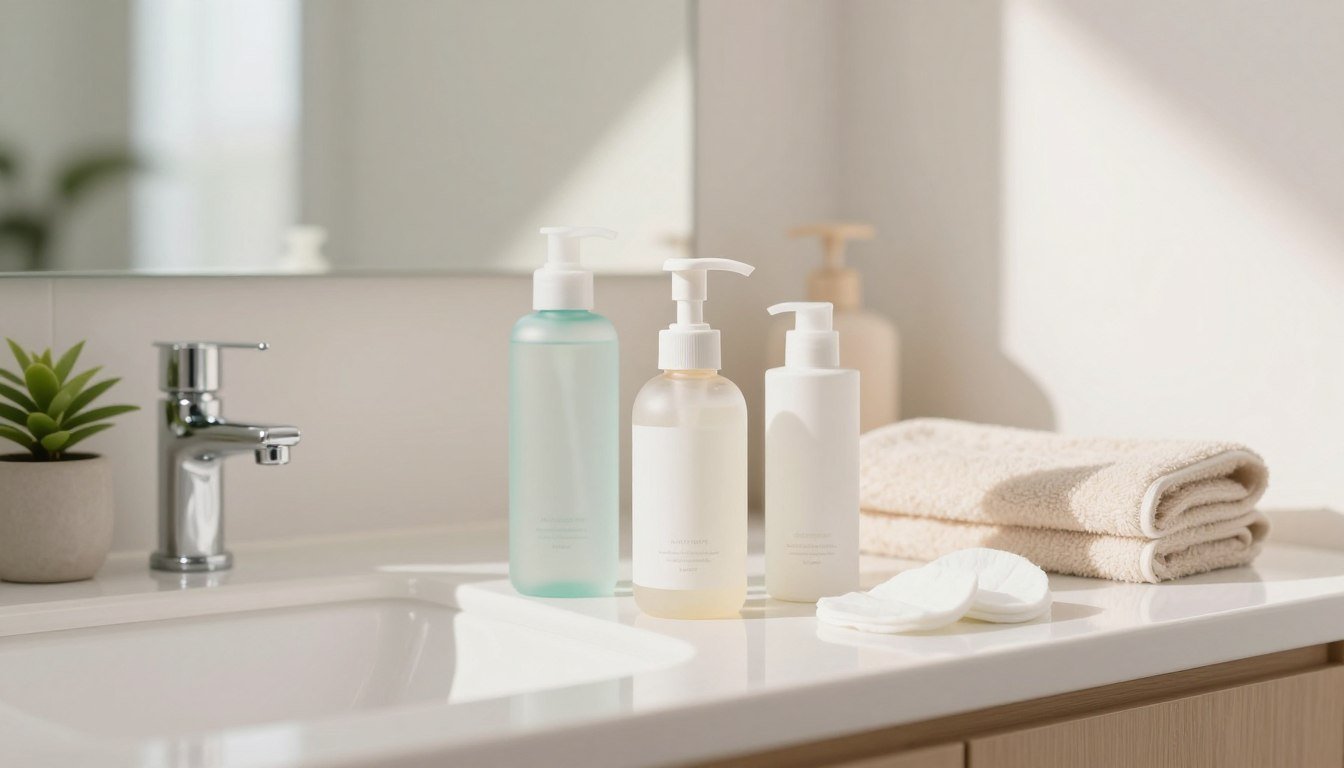
Getting clear skin is a journey that needs consistency and the right plan. Many face constant blemishes. But, a dedicated morning skincare routine can greatly improve your skin.
Remember, your cells renew every 20 to 40 days. So, be patient to see results. A morning skincare routine for acne-prone skin focuses on long-term health, not quick fixes.
Don’t follow viral trends without checking their science. Find the best skincare routine for acne that fits your needs. A structured Morning Skincare Routine for Acne-Prone Skin helps manage breakouts. Consistency is key to beauty.
What Acne-Prone Skin Really Needs
Your journey to clearer skin starts with knowing acne isn’t about being dirty. Many think scrubbing hard will fix it, but this can irritate your skin. Instead, use a gentle acne skincare routine that keeps your skin’s natural moisture.

Identifying Your Specific Acne Triggers
Breakouts affect everyone differently. Finding what triggers yours is key. Some react to certain foods, while others to stress or hormones. Keeping a journal can help track these patterns.
Knowing what causes your acne lets you make better choices for your acne-prone skin care routine. Common triggers include high-glycemic foods, stress, or hair products on your forehead. By identifying these, you can adjust your habits to fight acne.
The Importance of Consistency in Your Daily Regimen
Consistency is crucial for managing acne-prone skin. Your skin likes stability, and changing products too often can harm it. A steady skincare routine helps calm blemishes and prevent new ones.
Don’t over-cleanse, as this can dry out your skin and make it produce more oil. A balanced skin care routine keeps pores clear without drying out your skin. Remember, acne skincare is a long-term effort, and your patience will pay off.
The Essential Steps of a Morning Skincare Routine for Acne-Prone Skin
Starting your day with a morning skincare routine is key for clear skin. It helps manage blemishes and keeps your skin healthy all day. Stick to a routine that works for your skin type.
Cleansing to Remove Overnight Impurities
Cleansing is the first step in your morning routine. Your skin makes oils and sheds cells while you sleep. A gentle, pH-balanced cleanser removes these without drying out your skin.
Consistent cleansing is crucial. It prepares your skin for the next steps. Avoid harsh scrubs that can irritate your skin and make acne worse.
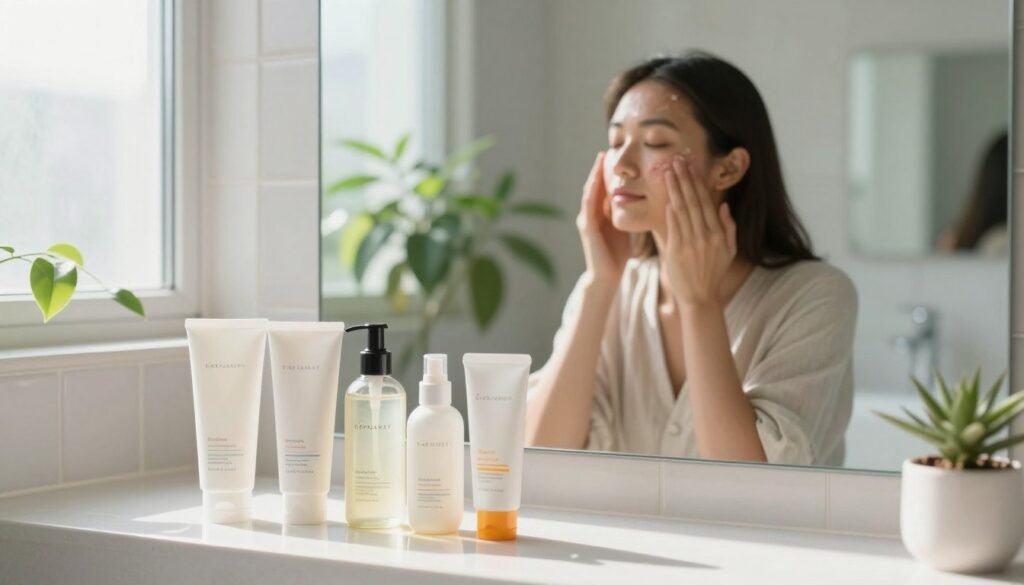
Applying Targeted Acne Treatments
After cleansing and drying, apply your acne treatment. This step is essential for tackling acne head-on. It delivers active ingredients to the problem areas.
Choosing Between Salicylic Acid and Benzoyl Peroxide
Choosing the right active ingredient depends on your skin’s needs. Both are effective but work differently to clear pores and prevent breakouts.
- Salicylic Acid: It goes deep into pores to clear oil and debris. Great for blackheads and whiteheads.
- Benzoyl Peroxide: Kills bacteria on the skin’s surface. Best for inflammatory acne and red bumps.
- Combination Strategy: Some alternate these treatments. Start slow to see how your skin reacts.
Hydrating Without Clogging Pores
Many with acne-prone skin skip moisturizer, fearing it will cause more breakouts. But, hydration is key to a healthy skin barrier. It prevents oil overproduction due to dryness.
Choose lightweight, oil-free, and non-comedogenic moisturizers. They provide moisture without clogging pores or causing new acne.
Protecting Your Skin with Non-Comedogenic Sunscreen
Sun protection is the last step in your morning routine. UV rays can darken post-acne marks. So, sun protection is crucial for clear skin.
Use a broad-spectrum, non-comedogenic sunscreen that feels light. It shields your skin from environmental stressors and helps you achieve a clearer complexion.
Selecting the Right Acne Skincare Products
Finding the right skincare products is key to clearer skin. The wrong products can make acne worse. By choosing wisely, you can help your skin stay healthy.
Reading Labels for Non-Comedogenic Ingredients
When looking for acne skincare products, look for “non-comedogenic” labels. This means the product won’t clog your pores. Always check the ingredients for things that might block pores.
To keep your acne skincare routine effective, look for these signs:
- Labels that say “non-comedogenic” or “oil-free.”
- Water-based products that moisturize without heavy waxes.
- Ingredients like salicylic acid or niacinamide that help clear your skin.
Avoiding Common Irritants and Fragrances
Strong scents don’t mean a product is cleaner. Synthetic fragrances can cause redness and irritation. When your skin is already broken out, these can make things worse.
Choose gentle, hypoallergenic products for your acne skincare. Avoid alcohol or essential oils, as they can dry out your skin. A good acne skincare morning routine uses soothing ingredients that calm your skin.
When to Consult a Dermatologist for Professional Advice
Over-the-counter products might not work for everyone. If you’ve tried many products without seeing results, it’s time to see a dermatologist. They can create a acne treatment plan just for you.
Think about getting professional advice if you notice:
- Deep, painful cystic acne that doesn’t get better with standard treatments.
- Scarring or dark spots after your breakouts heal.
- Persistent redness or sensitivity that affects your daily life.
- A need for stronger medications to control your symptoms.
Lifestyle Habits That Complement Your Morning Routine
A good skincare routine is more than just products. Your daily habits are key to lasting results. Small lifestyle changes can greatly improve your skin health.
Managing Stress to Prevent Hormonal Breakouts
Stress can make your skin produce more oil, leading to breakouts. Prioritizing mindfulness in your morning routine helps control these hormonal changes.
Start your day with five minutes of deep breathing or stretching. These simple actions can lower stress and help your skin stay clear. A calm mind is great for healthy skin.
Maintaining Hygiene for Your Pillowcases and Phone
Your environment harbors bacteria that can cause acne. Your phone and pillowcases collect oils and bacteria. Regular cleaning of these items is crucial for clear skin.
Wipe your phone screen with an alcohol-based pad each night. Also, change your pillowcases every two weeks to avoid clogged pores. These steps help keep bacteria away from your face.
The Role of Diet and Hydration in Skin Health
Your diet and hydration are as important as your skincare. Eating antioxidants fights inflammation. Staying hydrated keeps your skin’s barrier strong and flushes out toxins.
Eat whole foods like greens, berries, and nuts. Drink plenty of water to keep your skin soft and strong. Combining these habits with your skincare routine helps your body achieve healthy skin.
Conclusion
Your journey to a glowing face begins with daily choices. Getting clear skin takes time and effort. It’s a path that rewards your patience and dedication.
By following these tips, you can control your acne. A regular skincare routine is key to your success. Stick to it, and you’ll see changes over time.
Healthy skin shows your inner and outer care. Watch how your skin reacts to new products. Keep a journal to track your progress.
If you need help, talk to a dermatologist. Your hard work will pay off with a radiant glow. Begin your journey today and see the results of your efforts.
FAQs
How long does it take for a morning skincare routine for acne-prone skin to show results?
It takes at least a month to see results, as skin regenerates every 20 to 40 days. Consistency is key.
Can I skip moisturizer if I have oily, acne-prone skin?
No, you should never skip hydration. Use a non-comedogenic moisturizer to keep your skin healthy. Skipping moisturizer can lead to dehydration and worsen acne.
What are the best acne skincare tips for preventing dark spots?
Daily sunscreen is the best tip for preventing dark spots. Use a non-comedogenic SPF like EltaMD UV Clear to protect your skin from UV damage.
Should I use Salicylic Acid or Benzoyl Peroxide in my morning routine?
It depends on your skin’s needs. Salicylic acid exfoliates pores, while benzoyl peroxide kills bacteria. Choose what works best for you.
How often should I change my pillowcase to support my acne skincare routine?
Change your pillowcase at least twice a week. This prevents oils, sweat, and bacteria from clogging your pores and causing breakouts.
What should I look for when buying acne skincare products?
Look for “non-comedogenic” and “fragrance-free” labels. Choose products with active ingredients like niacinamide, zinc, or sulfur to calm inflammation without irritating your skin.